



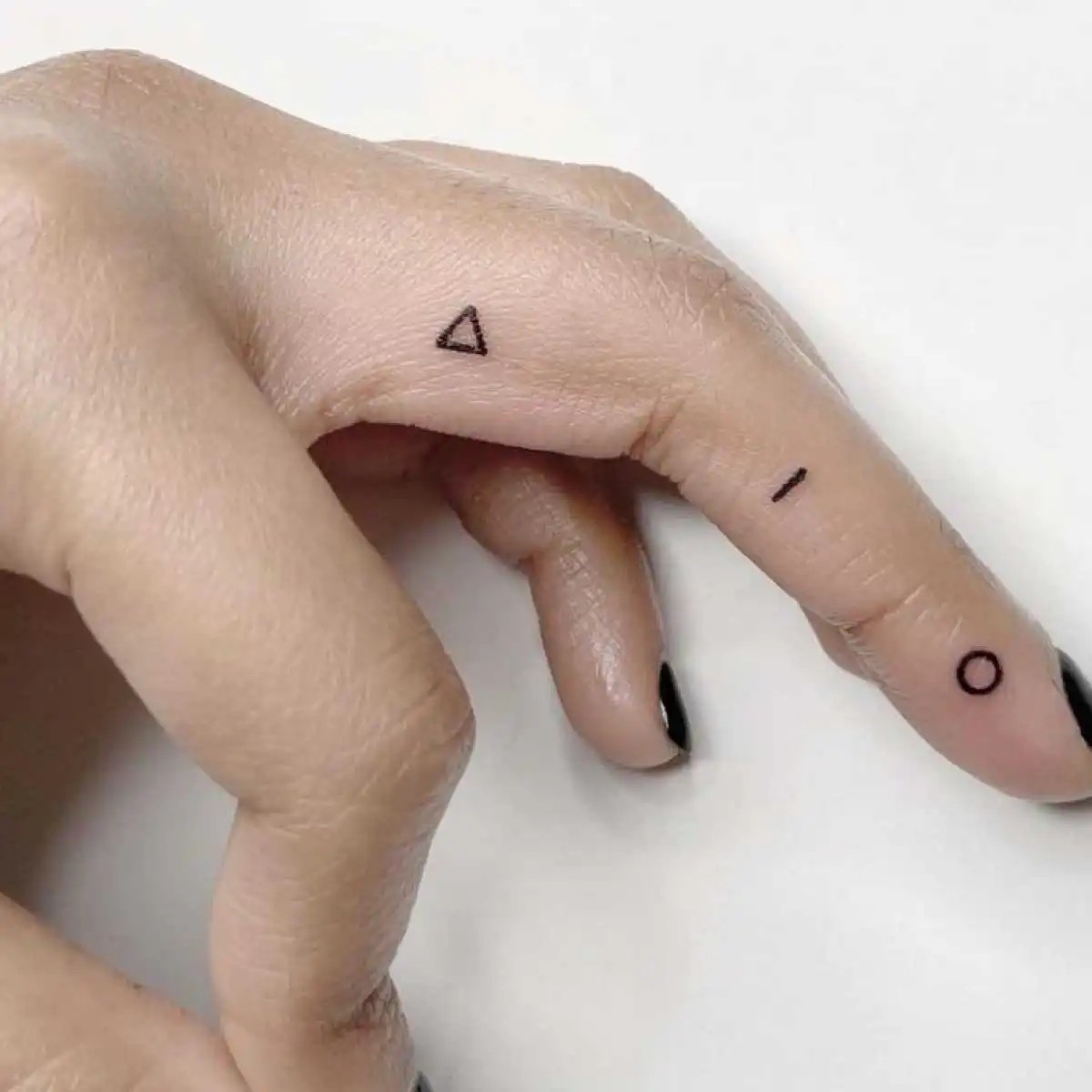
Our perspective on tattoo culture is changing. Now, not only large, eye-catching designs but also finer and personal details come to the fore. Especially recently, fingers have become the address for these mini works of art. Symbols that reflect your thoughts, beliefs, or just your current mood are now stored at your fingertips, not on your wrists. These small models offer both a cute aesthetic and a strong signal of personality.
Зміст
Why Are Fingers Preferred?
The question is: Why do we attach so much meaning to such a small area? The answer is simple. Visibility. The finger tattoo trend doesn’t just say “I am” but also “this is my style”. Small symbol, shape, word or a very short sentence… These attract attention when speaking or gesturing.
Unlike traditional large tattoos, finger tattoos are less painful (usually) and heal faster. But that’s not the point. The point is to remember those small but critical moments in your life with one of the most active points of your body. Loving a character, having a belief, or just being someone who loves a flower motif… It can all fit on your fingertips.
Which Patterns are Tendencia?
Research shows that the most popular finger designs of the season follow certain patterns. For those who do not like to be ordinary, the following options stand out:
- Minimalist Symbols: A small star, moon figure or a simple line.
- Personal Words: Single words with deep meaning. A Spanish love quote, a Japanese meaning, or just a word like “hope.”
- Geometric Shapes: Triangles, circles and uncomplicated but aesthetic lines.
- Plant Motifs: Small depictions of leaves, flowers or herbs.
Things to Consider
Fingers are one of the parts of the body that move most intensely and are subject to friction. Therefore, even a small finger tattoo requires attention. The risk of drying and fading is higher during the healing process. It is necessary to be patient. Also, do not ignore whether this appearance will be accepted in your business life.
“A tattoo is not just a picture, it is a story. Fingers are the most talked about parts of this story.”
In conclusion, the finger tattoo trend is just a trending trend.
Fingers. Small areas. Big impact.
If you’ve scanned your social media feed over the last few years, you’ll have noticed that this trend is inevitable. Small, slim, minimalist. It is exactly in line with the spirit of modern aesthetics. But is this just an “Instagram filter” effect? Or is there a deeper practicality behind finger tattooing?
Let’s dive into the details of this small but remarkable trend.
Why Finger Tattoo?
Simplicity is always a matter of preference. Large areas like the torso or arms require serious commitment. The fingers are different. This is one of the most mobile, most flexible and most visible points of the body.
Here are the key factors increasing the popularity of the finger tattoo trend:
- Minimalist Aesthetics: Clean lines instead of complex designs.
- Low Cost: Prices are more affordable since it is generally used in smaller areas.
- Easy Maintenance: The maintenance process is completed faster compared to other large tattoos.
- Social Media Impact: Searches for “finger tattoo” have exploded on Instagram and Pinterest.
However, it is worth stopping here and asking a question: Is it what you really want, or is it just following the trend?
Design Diversity: One Finger or All?
The finger tattoo trend is not confined to a single formula. Whether a hidden geometric shape on a single finger or fine lines scattered across all fingers… The choice is yours.
Some artists suggest simple triangles, circles or fine-line floral details. Others are working on more complex, integrated designs. The important thing is compliance with the natural movement of the fingers.
- Singular Selection: A small symbol on the signature finger or ring finger.
- My Group Selection: Similar or different motifs on all fingers.
- Mixed Style: Geometric on one finger, calligraphy on the other.
Risks and Realities: A Bustling Field
Let’s look directly at the truth without making a smooth transition here. Fingers are the most difficult parts of the body for tattoos.
From where?
- High Movement: We use your hands constantly. Swimming, washing, touching… These movements make it difficult for the ink to adhere.
- Skin Structure: The skin is thicker and tighter on the fingertips. Ink penetrates less deeply.
- **Nerve and Vascular Dense
Finger tattoos: History, meaning and things to consider
Finger tattoos are not just an ornament. Its roots are very deep. Egyptians used it to mark energy points. Tribes are to indicate status. And to instill fear in your enemies. In Central Asia the situation was more practical. It functioned instead of a ring. It wouldn’t get lost. It couldn’t be stolen. Women also preferred it to emphasize their beauty or to symbolize their marriage bonds.
Today the situation is different. Circus acrobats started this trend in the early 20th century. Then the music world stepped in. They increased the trends. Now we are in a period where minimalist tattoos are on the rise. Teenagers and young adults frequently prefer it. Small, slim and eye-catching.
What should you know before getting a finger tattoo?
Fingers are one of the toughest parts of the body. From where? Constant contact. Washing. Movement. Therefore it requires maintenance. The first days are sensitive.
- Pain level: Fingers are skinless. Nerve endings are dense. You will feel the pain higher than in other areas. Trust your endurance.
- Aging and deletion: Fingers have a constantly renewing structure. The tattoo may fade over time. It can be scratched. The risk of deletion is higher than in other regions. Regular trimming may be required.
- Occupation factor: Tattoos may still not be accepted in some workplaces. Fingers are visible. It’s hard to hide. Review the rules of your profession.
- Design selection: Intricate details may not look good on the finger. Simple, slim-line designs last longer.
- Master selection: It is necessary to find an experienced tattoo artist. Processing on fingers requires technical skill. Faulty work breaks down quickly.
Maintenance and sustainability
After getting a tattoo, care is essential. Since fingers are washed every day, soap and water contact occurs frequently. This makes it difficult for the ink to adhere.
- Use moisturizer in the first week.
- Apply sunscreen.
- Avoid chemical cleaners.
- Pay attention to hygiene against the risk of fungal infection.
Remember: Finger tattoos are a commitment as well as an aesthetic choice. It requires patience. May require correction. But if it is done correctly and looked at correctly, it can be a very original form of expression.
Finger tattoos for modern women, small but powerful
Finger tattoos are in fashion. We see them in influencers, musicians and friends who decided to get inked without hesitation. But before you roll up your sleeves and commit, take a breath. This is not just an ink decision. This is a special subtype of tattooing that presents unique biological and practical challenges.
It’s all hard real estate in your hands. they are always on the go. They touch everything. They get washed more than any other part of your body. If you are considering getting a finger tattoo, you should understand the process before making a decision. Here’s the bare truth about getting ink on your fingers.
Select the appropriate artist
Not all tattoo artists know how to work with the mechanics of fingers. The skin on the fingers is thin and has a different texture than the skin on the back and thighs. Artists who specialize in creating large, flowing pieces may struggle with the precision required by the tiny line on a joint.
You need someone who has done this particular job before. Check out their portfolio. Do they have clear, healed finger tattoos on their fingers? Or does the ink look blown out and make it look blurry? Unless an artist has done fingerwork dozens of times, they may not understand how ink settles on certain tissues. Don’t play on a permanent canvas with amateurs.
Location is more important than you think
Not all fingers are created equal. Some places may hold ink better than others. The sides and tips of the fingers usually last longer because there is less friction and the skin is more stable.
The joints? Those are trouble spots. Every time you make a fist or type on a keyboard, your skin stretches and contracts. This constant movement can blur lines and fade quickly. The webbing between fingers is also tricky. This area does not heal well and usually disappears quickly.
Most people choose the index or ring finger. It’s a subtle place that doesn’t call attention to itself, but it’s enough to stand out. The thumb is also a popular area, but it is also an area that experiences a lot of friction. If you want longevity, avoid the sides of your knuckles and fingertips as much as possible.
Size and design: less is more
Large, complex patterns rarely fit fingers. The area is very small. A complex Mandala can look like a piece of mud when it heals. Instead, choose clear lines, simple geometric shapes or small symbols. Think minimally. Think bold.
Discuss scaling issues with your artist. In some cases, thicker line may be needed to prevent the ink from seeping into the surrounding skin during the healing process. If the lines are too thin, it might disappear entirely as the skin sheds.
Regular treatment is not negotiable
There’s a reason finger tattoos fade so quickly. you wash your hands Touch the surface. I’m wearing gloves. You can damage the table. To make the ink last longer, it needs to be handled with more care than a calf tattoo.
The artist’s aftercare instructions must be strictly followed during the first few days. Keep it clean. Keep it moisturized. Avoid soaking in water. If you are a cook, nurse, or someone who works with your hands, you may want to consider wearing gloves or temporary protection during the healing process. Neglect this step, and you’ll likely end up
Why minimalist finger tattoos are trendy
Moving towards minimalistic tattoos isn’t just a trend, it’s a real choice. Small, simple ink on the fingers is becoming increasingly popular as it is less noticeable and requires less maintenance than full sleeves. But there’s a problem. These designs live in high traffic areas. You need to know exactly what you’re getting into before you sit down.
Here are the designs currently dominating the space.
Meaningful initials and numbers
This is the first choice for personalization. It’s not just about looking good; It’s about carrying the symbol.
*Relative’s initials
* Important dates packed in numbers
* Specify the abbreviation of your personal identification number
It’s very intimate. It’s small. It stays close to the skin.
Symbolic markers
Heart shapes. Stars. Moons. These aren’t just random doodles. These are shorthand for identity.
People choose these to reflect their personality or cherish memories. A little crescent moon on the side of your finger means the world to some people. For others, it’s just a design. Power is in purpose, not complexity.
Details inspired by nature
If you like the outdoors, this route is perfect for you.
Silhouette of a small leaf
* Minimalist bird outline
* Delicate petals
one branch
These elements work well because they naturally fit the narrow canvas of a finger. Instead of competing for space, they compete with each other. They flow with it.
Animal motifs
It’s not just about cats and dogs anymore. These are still popular, but the range is much wider.
Fish
a horse
*lions
* Birds of prey
For animal lovers, this is a direct way to express their passion. A tiny lion head on the knuckle? In bold. A subtle wing on the finger joint? Elegant.
Geometric minimalism
Triangles. Lines. Circles.
In the age of “less is more”, geometric patterns are king. They are clean. They age well. The lines are clear and thick for the size, so they don’t blur.
The reality of healing and pain
Let’s talk about the part that most people skip until it’s too late.
How long does it take for a finger tattoo to heal?
Usually 2-4 weeks. But don’t expect this to be a guarantee. Your schedule depends on your skin type, the darkness of your tattoo, and how well you follow the aftercare instructions. If you irritate it, forget to use moisturizer, or soak it in a hot tub too soon, you’re resetting the clock.
**Does it hurt? **
Yes. More than most other spots.
Your fingers are covered in nerve endings. There’s almost no fat or muscle to cushion the needle. It’s a bone-deep discomfort. If you’ve never had a tattoo before, this will come as a shock. If you have experience, you’ll still flinch. Pain tolerance varies, but be prepared.
Will the color fade?
This is the harsh truth. Finger tattoos fade faster than back or thigh tattoos.
Constant friction. Wash your hands. Sun exposure. Movement. All of these reduce the quality of the ink. You will likely need touch-ups. Some people don’t care about this. They see it as part of the process. Others are horrified. Know your preferences.
Is it safe?
It carries the same risks as any other tattoo, but some of the risks are increased by the location of the tattoo. Poor hygiene can increase the risk of infection, as people often touch everything from doorknobs to food.
You have to choose artists who see sterilization as a religion and not a piece of advice. If their studio is not clean, walk away. Period.
Who should skip this?
Don’t get a finger tattoo if:
- You have an active skin disease on your hands (eczema, psoriasis relapse).
- You have open wounds or recent infections.
- Your work often requires wet work or heavy work without the use of gloves.
- Mobility problems make it difficult to clean the area.
Final Judgment
Finger tattoos are a bold expression in a small package. stylish, low-key,


