



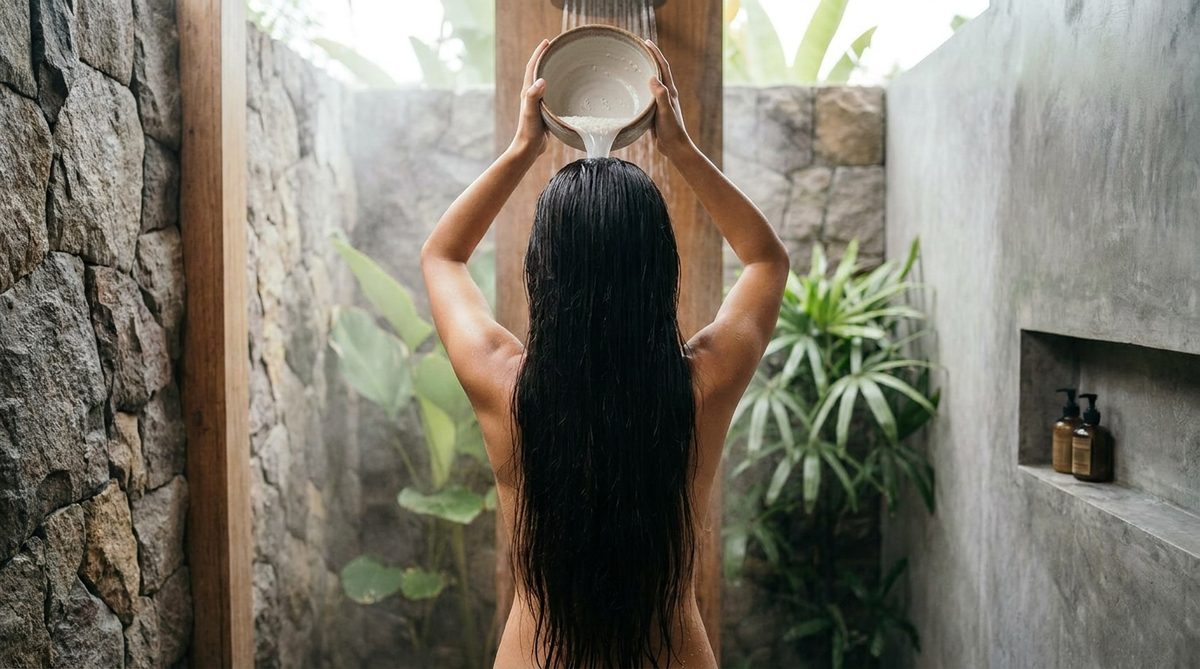
Most people just pour the rice soaking water into the sink without thinking about it. It was a small move, but it was actually a missed opportunity. This cloudy liquid can be an amazing hair conditioner, especially if you first notice gray hairs appearing at your temples. The contrast there is often unpleasant. Hair tends to thin and dry. White strands capture the light differently and create the impression of “tired” hair.
Spring brings new hopes. Simple everyday life is again at the forefront. A clever initiative to saving the rice water, letting it ferment, and using it is gaining attention. The visual effect of the gray temples is truly amazing.
Зміст
Why did Gray first appear in the temple?
Gray hair often appears on the temples due to several negative effects. You rub it with glasses arms. Sunglass frames press against the skin. Repeated styling stresses your hair. They can also be directly exposed to light. The hair fibers here are also thinner than usual.
White hair is naturally more rigid and drier than it should be. It started to become more noticeable. Standard treatments fail here. Rich masks slide over the problem because they are primarily applied to the length. The temples require a precise, regular and gentle touch.
Rice water offers an easy solution. A thin film of starch and micronutrients is deposited on the fibers. This will help you achieve a smooth look while avoiding stickiness. Two things are important: regularity and proper preparation. If you don’t have enough water, your stitches can become rough.
The science behind the brilliance
The real ingredients of water explain what makes it so interesting. Mainly starch. This is binding. It also contains amino acids and antioxidants that occur naturally in grains.
Improves the feel of hair fibers. Reduces small irregularities in the cuticles. Gives a sharper shine. It is especially visible around the face. That shine changes perception. White strands often look “blended” with the rest. They do not disappear. They just catch the light in a less chaotic way.
The benefits of gray temples are twofold.
- Smoother fibers.
- Better styling hold.
In short: less frizz. There will be less static electricity. A neater hairline.
Fermentation: key differences
The difference between plain rice water and fermented rice water is during rest. Fermentation changes the pH. It modifies the “feel” of the rinse. Done well, it is believed to be more comfortable for reactive scalps. You can also make certain components easier to use. A more aesthetically pleasing effect can be achieved. The fibers appear regular.
However, if fermented for too long, it becomes irritating and smelly. This causes the routine to fail. In sensitive temples, the goal is still lightly fermented water. Use as a closing gesture.
You can use it, but don’t overdo it.
Keep your process under control. Watch for sour smells. If it stinks, it’s too far gone. Gentle fermentation helps. Smoothes cuticles. It reduces the starkness of new gray hairs. This is not a dye job. It is an optical illusion created by better texture.
L’eau de riz n’est pas une invention de laboratoire. C’est ce qui reste quand on lave le riz blanc ou semi-complet. Laisser reposer cette eau à température ambiante permet aux nutriments de se diffuser. Ensuite, on garde le tout au frais. La simplicité bat les mélanges complexes. Voici comment procéder au printemps, quand il fait plus doux.
Préparer la base stable
Vous avez besoin de trois choses. Sixante grammes de riz. Cinq cents millilitres d’eau. Un bocal propre avec un couvercle.
Rincez le riz d’abord. Enlevez l’excès d’amidon. Mettez-le dans les 500 ml. Attendez vingt à trente minutes. L’eau devient trouble. C’est le signal. Filtrez. Versez dans le bocal.
Attendez maintenant. Vingt-quatre à quarante-huit heures dehors. Pas de soleil direct. Quand l’odeur devient légèrement acidulée, c’est bon. Le frigo s’occupe du reste. Gardez cela pour cinq jours maximum.
Une dilution est souvent bienvenue : une part d’eau de riz fermentée pour une part d’eau claire.
Diluer évite les agressions. La tolérance s’améliore. Les résultats deviennent plus réguliers. C’est un détail qui change tout sur les tempes.
Appliquer sans alourdir
Le secret est la ciblage. Ne noyez pas votre chevelure. Après le shampooing, prenez l’eau diluée. Appliquez-la sur les tempes. Et sur la lisière du visage. Cheveux essorés, bien sûr.
Une petite quantité suffit. Répartissez avec les doigts. Massez le cuir chevelu. Doucement. Une minute. Ne grattez pas.
Laissez poser. Trois à cinq minutes. Le film a besoin de temps pour se déposer. Rincez vite à l’eau tiède. Évitez l’effet carton. Le séchage compte autant que le soin. Tamponnez. Frottez jamais. Laissez l’air libre ou utilisez un air tiède à distance.
Répétez deux fois par semaine. Sur six à huit semaines. C’est le temps nécessaire pour voir une évolution réelle. Attendez une brillance plus uniforme. Et des tempes moins “électriques”.
Suivi semaine après semaine
Ne vous laissez pas raconter d’histoires. Regardez les indices.
Au bout de deux semaines. La fibre est plus souple. Surtout quand vous coiffez. Moins de petits cheveux qui rebiquent autour des tempes. C’est tangible.
Vers la quatrième semaine. La casse diminue. Surtout près du visage. Les longueurs paraissent plus régulières. Les mèches blanches, souvent sèches, se placent mieux.
Entre la sixième et la huitième semaine. Le changement visuel surprend. Les tempes paraissent plus nettes. Les cheveux blancs moins “flash” sous la lumière. C’est là que la promesse tient. Des résultats visibles sur les tempes grisonnantes. Surtout si vos cheveux sont fins, secs ou poreux.
Erreurs à éviter absolument
Quelques fausses manières ruinent tout.
Une eau trop fermentée irrite. La zone devient inconfortable. Vous arrêtez. C’est logique.
Une solution trop concentrée laisse un dépôt. Ternit au lieu de faire briller.
Une fréquence trop élevée dessèche. Crée l’effet inverse. Tempes rêches.
La chaleur directe annule le gainage. Plaques chauffantes près du visage. Frottements répétés. Serviette qui frotte fort.
Pour garder le bénéfice. Visez un geste minimaliste. Doux et constant. Pas fort et ponctuel.
Illusion d’optique ou amélioration réelle ?
Quand les cheveux blancs paraissent moins visibles. C’est un effet combiné. Une cuticule plus lissée renvoie la lumière uniformément. Cela réduit l’aspect “mèche argentée isolée” typique des tempes.
Le gainage limite les frisottis. Ces derniers attrapent la lumière et amplifient le contraste. Il y a donc une part d’illusion d’optique. Mais elle repose sur une amélioration réelle de la surface.
Autour du visage. L’effet est immédiat sur le rendu global. Le bord de chevelure semble plus dense. Plus soigné. Deux éléments saillent. Moins de mèches rebelles. Plus de brillance. L’impression change dès le miroir.
Autre surprise. Cheveux plus forts autour de la zone. Quand la casse diminue. Les tempes arrêtent de donner cette sensation de “creux”. Ou de petites mèches irrégulières.
La routine agit comme un soutien cosmétique. Elle n’épaissit pas magiquement. Mais elle aide la fibre à mieux résister.
Concernant la repigmentation. Restez prudent. Le cheveu blanc vient d’une baisse de mélanine. Aucun rinçage ne peut promettre de recolorer durablement. En revanche. Rendre le cheveu blanc plus doux. Plus lisse. Mieux aligné. Suffit souvent à le rendre moins voyant.
Cette approche profite aux cheveux secs. Poreux. Bouclés. Sensibilisés. Et aux cuirs chevelus qui supportent mal les soins lourds. En cas d’irritation. De dermite. De cuir chevelu très réactif. Espacer ou arrêter. Le confort reste prioritaire.
Diet is as important as rinse. A stable fuel is required to make the line less prone to breakage and maintain its shape. In particular, you need high-quality protein, iron, copper, zinc, B vitamins and omega-3 fatty acids. The trap? Especially in spring, when we eat less, we end up reducing or over-restricting our protein intake. This weakens regrowth.
A varied diet including legumes, fatty fish, eggs, nuts and green leafy vegetables supports keratin and resistance. This does not guarantee that your hair will not turn gray. But it helps limit the damage. Hair on the face looks more harmonious. There are two things that make a difference. regularity and no deficiencies.
Hydration and Stress Weigh on the Scalp
Sleep and stress can affect the balance of the scalp. Chronic sleep deprivation and chronic stress can increase discomfort, itching and mild inflammation. This does not compromise the quality of the fibers or the sensation of density on your temples.
A gentle routine brings everything full circle. When the sun shines too strongly, Wear sunscreen on your part and face contour. Limit heating tools. Choose hairstyles that pull less. Massage the scalp briefly to stimulate microcirculation, but don’t be too aggressive.
It is simply reconstituted by alternately fermenting rice water. Consider applying a light aloe vera gel to the tip. This will keep your hair flexible. This strategy can be summed up in two words: gentleness and Consistency.
Transforming the Temple Area
Keeping rice water. Letting it ferment just long enough. Then using it as a targeted rinse. You can change the look of your temple in just a few weeks. You get less frizz. A more uniform shine. And under light, gray hair looks “less dazzling”.
We do not guarantee repigmentation. This routine depends on the real fiber gainage. Use gentle gestures appropriate for vulnerable areas.
Interesting questions remain. If a simple rinse can change so much around the face, what other oft-discarded or forgotten daily habits should you return to?


