



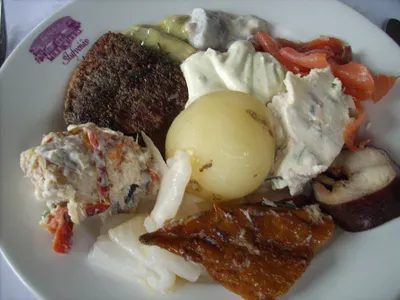
It wasn’t always about the fancy spreads we see today. In Swedish country districts, a smorgasbord was a practical solution for large gatherings. Guests brought their own contributions. Long tables groaned under the weight of whatever the community could provide. You helped yourself. That was the deal.
By the 18th century, this casual dining had evolved into something more structured. Festive meals began with a bannvinsbord. Think of it as a pre-game appetizer station. Aquavit flowed freely. Pickled herring sat ready. These were the delicacies that started the night off right.
What Actually Goes on a Smorgasbord Table?
Modern interpretations vary wildly. You might find a simple table with just the basics: bread, butter, cheese, and some pickled herring. Or, you might see an elaborate display with scores of dishes. The variations on herring alone are dizzying. A dozen ways to prepare one fish.
Beyond the brine, you get pâtés. Cold meats. Salads. But the real stars are the Swedish specialties. Gravlax is marinated salmon cured with salt and dill. Meatballs are a staple. Then there is “Jansson’s temptation.” It sounds like a sin, but it’s actually a comforting casserole of potatoes, onions, anchovies, and cream. It is rich. It is salty. It is exactly what you want on a cold day.
Who Perfected the Tradition?
If you are looking for the specific place that helped define the modern experience, look to Stockholm. The Operakallaren restaurant is credited with reestablishing and perfecting the smorgasbord after World War II. They took the rustic roots and refined them. They turned a communal necessity into a culinary institution.
It raises a question about how we define tradition. Is it the original village table? Or is it the polished version that survives? The answer seems to be both. The bread is still bread. The herring is still herring. But the way we serve it tells a story of its own.
What happens when a feast becomes a formula? The ingredients stay the same. The context shifts. You end up with something that feels familiar but is slightly different from what came before. Just like the meal itself.


