





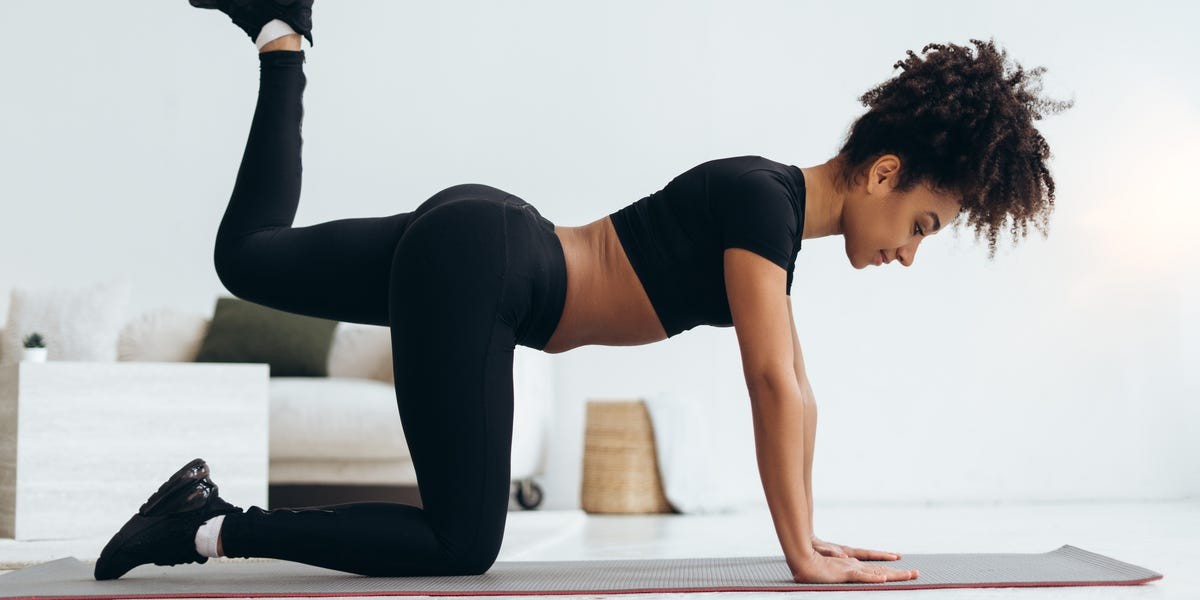
The fitness world is currently captivated by a specific aesthetic goal: the “glute shelf.” This term describes a prominent, rounded protrusion at the top of the buttocks, creating a distinct line between the lower back and the glutes. While it has become a viral sensation on social media, it is important to distinguish between internet slang and anatomical reality.
Understanding the Anatomy
You won’t find “glute shelf” in a medical textbook. Anatomically, the shape of your backside is determined by the gluteus maximus, medius, and minimus. The maximus and medius are primarily responsible for the size and shape of the posterior.
According to experts, including exercise physiologist Rachelle Reed, PhD, the “shelf” look is an aesthetic outcome rather than a specific muscle group. While certain exercises can emphasize the upper portion of the glutes, hypertrophy (muscle growth) occurs across the entire muscle. You cannot isolate growth to just the top inch of the muscle; instead, you build a fuller, denser backside as a whole.
The Role of Genetics and Training
While targeted training is effective, it is not the only factor in how your body responds:
* Genetics: Your DNA influences muscle structure, hormonal responses, and how quickly you build mass. Some individuals are naturally predisposed to a more prominent “shelf.”
* Consistency: Despite genetic predispositions, consistent resistance training, adequate protein intake, and proper recovery can significantly alter your physique.
* Function vs. Aesthetics: A “glute shelf” is a visual goal. However, the process of building those muscles provides functional benefits, such as improved hip stability, increased power, and better spinal support.
How to Train for Glute Development
To achieve significant growth, you must apply progressive overload. This means gradually increasing the challenge to your muscles by adding weight, increasing repetitions, or improving your lifting technique.
Experts recommend choosing three exercises from the following list for a dedicated glute session, aiming for roughly three sets of six to eight repetitions depending on the weight used.
1. Romanian Deadlift (RDL)
This is a “hip-dominant” movement that targets the entire posterior chain, including the glutes, hamstrings, and lower back.
* The Benefit: It places the glutes under intense tension during a deep stretch at the bottom of the movement.
* How to do it: Stand with feet shoulder-width apart, holding weights at your thighs. Hinge at the hips by pushing your butt back while keeping a straight spine. Lower the weights toward the floor, then squeeze your glutes to return to a standing position.
2. Hip Thrust
Widely considered one of the most effective movements for glute hypertrophy.
* The Benefit: It emphasizes a powerful contraction at the top of the movement without overstressing the lower back.
* How to do it: Rest your shoulder blades against a stable bench with your feet flat on the floor. Drive through your heels to lift your hips until your body forms a straight line from shoulders to knees, squeezing the glutes hard at the top.
3. Step-Ups
A functional movement that combines strength with a stability challenge.
* The Benefit: It places high tension on the gluteus maximus.
* How to do it: Stand in front of an elevated step. Step onto the platform with one foot, press through that heel to lift your body up, and bring your trailing leg toward your chest. Lower yourself back down with control.
4. Clam Shells
An isolation-style movement that focuses on the lateral aspects of the hip.
* The Benefit: It targets the glutes and the outer/inner thighs for a well-rounded look.
* How to do do it: Lie on your side with knees bent at 90 degrees. Keeping your feet together, lift your top knee toward the ceiling as far as possible without tilting your hips, then lower.
5. Bulgarian Split Squat
A challenging unilateral (single-leg) exercise.
* The Benefit: It intensely targets both the gluteus maximus and medius while improving balance and stability.
* How to do it: Stand facing away from a bench or step, placing one foot behind you on the elevated surface. Lower your hips toward the ground by bending your front knee, then drive back up through your front heel.
Summary: Achieving a “glute shelf” requires training the glutes as a complete muscle group through heavy, progressive resistance training rather than attempting to isolate a specific “shelf” area.