





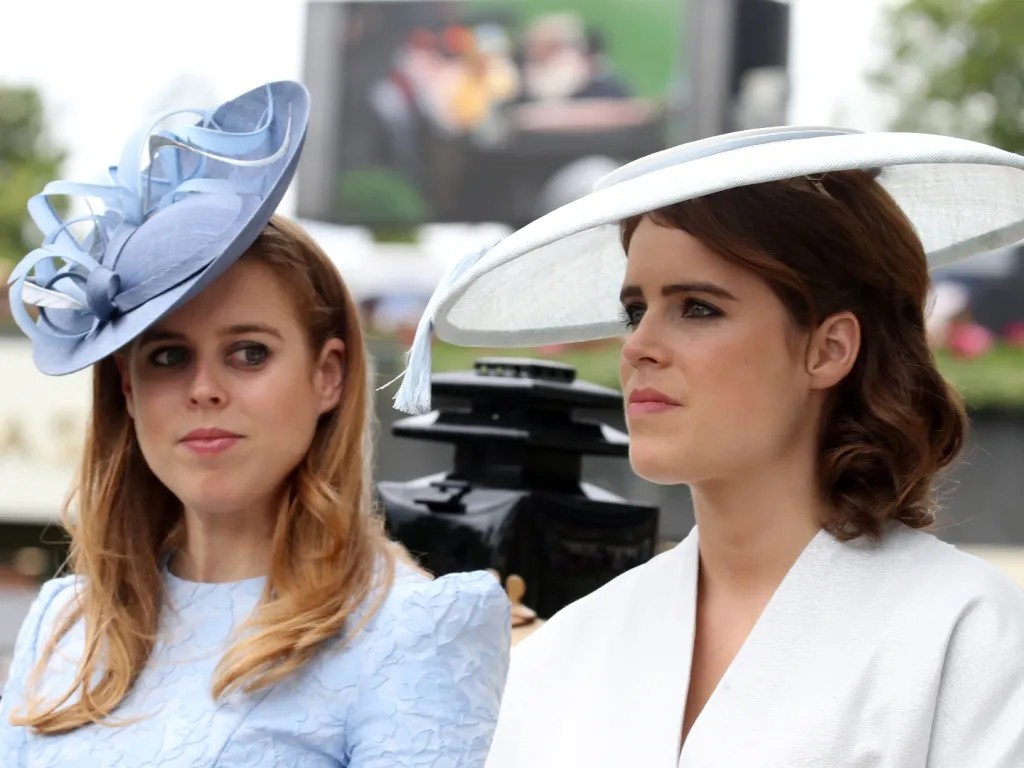
Recent reports suggest a shift in the internal dynamics of the British Royal Family regarding the upcoming Royal Ascot. After initial indications that Princesses Beatrice and Eugenie might be excluded from the prestigious event, new information suggests that King Charles III and Queen Camilla may have extended personal invitations to both princesses.
A Sudden Change in Direction
The Royal Ascot is a cornerstone of the British social and royal calendar, known for its high-profile horse racing and strict social protocols. Earlier reports indicated a growing distance between the core working royals and the York branch of the family—specifically Princesses Beatrice and Eugenie, as well as their father, Prince Andrew, and mother, Sarah Ferguson.
Initial speculation suggested that the princesses would be barred from attending, following their absence from recent major events like the Easter Sunday service. However, according to NewsNation, the King and Queen have reportedly made a “180-degree” turn, personally inviting Beatrice and Eugenie to occupy seats in the Royal Enclosure and the Royal Box.
The Cost of Inconsistency
While the invitation may seem like a gesture of family reconciliation, royal commentators warn that the sudden reversal could have negative implications for the monarchy’s public image.
Shauna Kay, host of The Vintage Read Show, noted that these frequent shifts in policy can undermine the perceived stability of the Crown.
“Backflips are not good — it makes people very unstable, unsure, it makes the king look really dithery… It just makes the palace look indecisive and uncoordinated.”
This pattern of “decisive moves” followed by immediate reversals raises questions about the current level of coordination within the Palace. For a monarchy that relies heavily on the perception of tradition, dignity, and unwavering protocol, appearing indecisive can be a significant branding challenge.
Why This Matters
The tension between the “working royals” and those with less formal roles—such as the York family—reflects a broader trend of the monarchy attempting to streamline its public presence. By distancing certain members, the Palace often seeks to focus public attention on the core heirs, such as Prince William.
However, when decisions regarding attendance are reversed quickly, it creates a sense of internal friction rather than a cohesive front. The upcoming Royal Ascot, scheduled for June 16–20, 2026, will serve as a critical test of whether the Royal Family can maintain a unified and stable public image.
Conclusion: The reported reversal regarding Princesses Beatrice and Eugenie highlights the ongoing struggle to balance family ties with the strict public management of the Royal Family. Whether this move signals a genuine reconciliation or merely temporary indecision remains to be seen.