


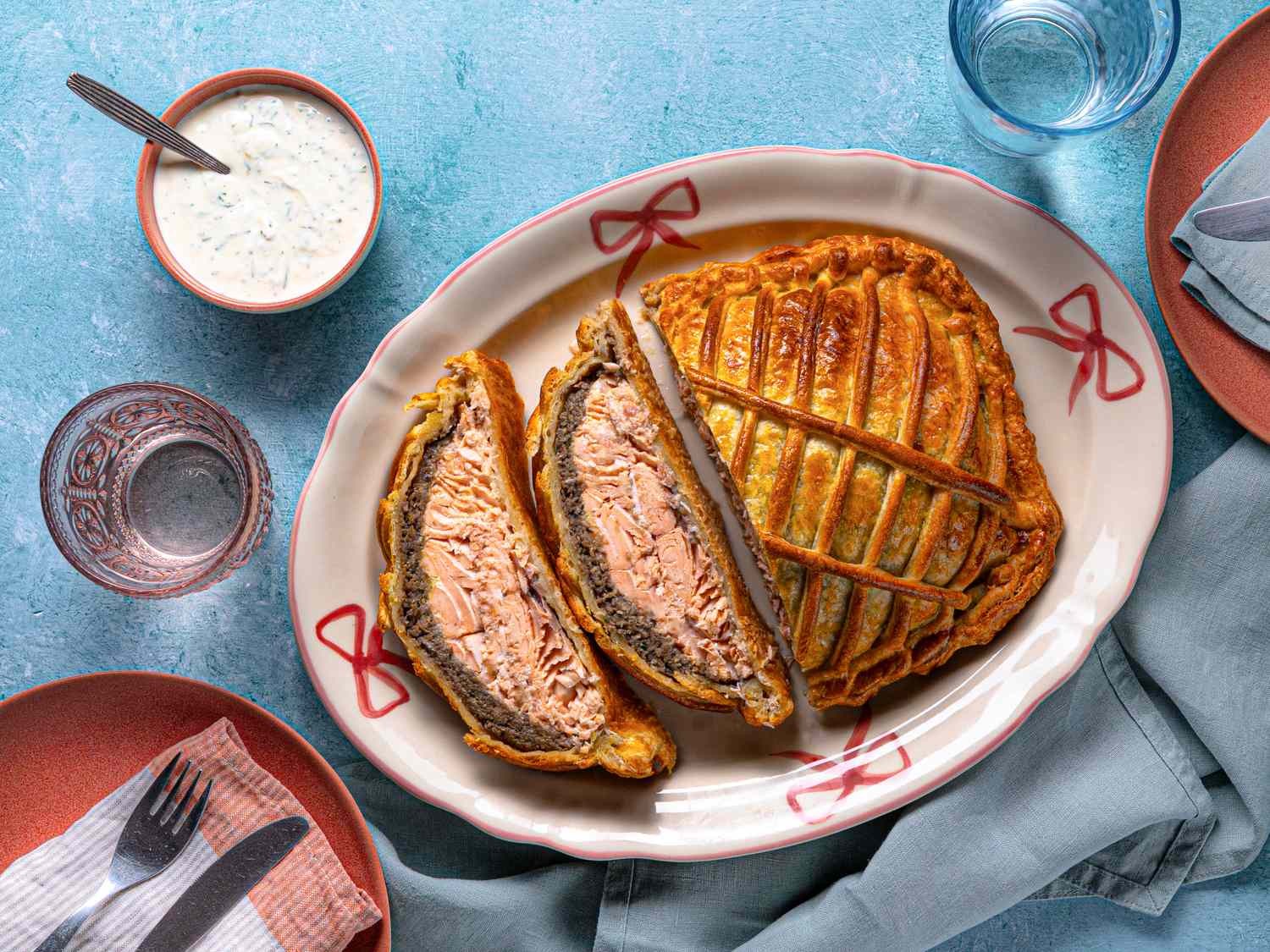
Every December, beef roasts dominate holiday tables. Prime rib, tenderloin, and Wellington take center stage – but fish, specifically a beautifully prepared salmon, can be just as striking. This Salmon en Croûte (or Salmon Wellington) offers a glamorous alternative: hearty, flavorful, and capable of captivating guests.
This dish is essentially a celebratory roast, indulging in rich puff pastry and savory mushroom duxelles. Unlike traditional beef Wellington, the salmon version brings a lighter, yet equally impressive, centerpiece to the table. Here’s how to transform a simple salmon fillet into a showstopping meal.
Зміст
Choosing the Right Salmon for Success
Selecting the right salmon is crucial. Unlike pan-searing where you control cooking time, a pastry-wrapped salmon bakes longer. This means the fish will cook closer to medium-well, so a higher fat content is essential. The fat melts during baking, basting the flesh and keeping it tender.
Avoid lean cuts like many wild Pacific varieties. Instead, opt for well-marbled farmed Atlantic salmon or buttery wild king (Chinook). Leaner salmon will dry out before the pastry is golden.
Always choose a center-cut fillet with uniform thickness for even cooking. Avoid the thin tail portion, which overcooks easily and ruins the texture.
The Savory Foundation: Mastering the Duxelles
The mushroom duxelles serves the same purpose as in Beef Wellington: adding depth and preventing soggy pastry. However, with salmon, it also balances the fish’s natural richness.
The key is to cook the duxelles until completely dry. Moisture ruins crisp pastry. Finely chop mushrooms and sauté with butter, shallots, garlic, thyme, and a touch of Madeira (optional) until almost no liquid remains and the mixture darkens. Once cooled, it forms a flavorful barrier that prevents sogginess.
Sealing the Pastry: Avoiding Disaster
A burst puff pastry is heartbreaking. The common mistake is folding pastry over the salmon and pinching a single seam – a weak point that steam will exploit.
This recipe uses two full pastry sheets (one under, one over) sealed completely around the salmon for even support. Press gently to eliminate air pockets, which expand during baking and weaken the seal.
Follow these rules:
– Use egg wash as glue for better adhesion.
– Trim to a rounded shape.
– Crimp firmly to fuse and create a decorative edge.
– Chill for at least one hour before baking; cold pastry puffs, warm pastry slumps.
Decorative Flair: Presentation Matters
A lattice or crisscross design adds elegance. Roll out pastry scraps, slice into thin strips, and press gently onto the bundle. Trim overhang for a clean look.
Brush the entire surface with egg wash for a deep golden finish.
Baking, Resting, and the Tangy Finish
Bake at 400°F (200°C) in the upper third of the oven for rapid lift and browning. Resist slicing immediately. Rest for 10–20 minutes to redistribute juices and firm the pastry.
A tangy dill sauce is the perfect complement, cutting through richness with brightness.
Salmon Wellington proves that fish can be just as impressive as beef on the holiday table. With careful preparation and attention to detail, this dish will undoubtedly steal the spotlight.