





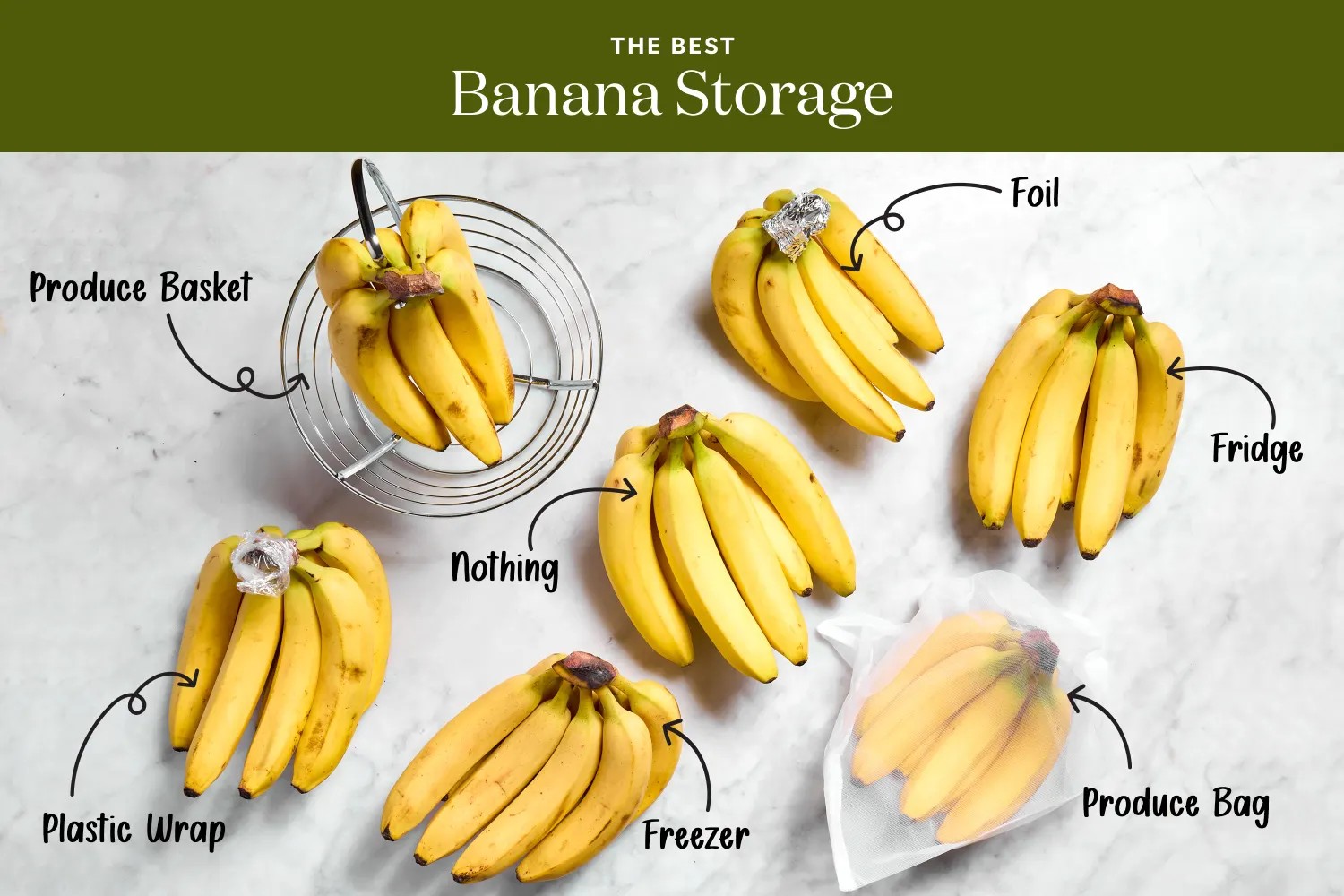
Most people buying bananas face a common problem: they ripen too quickly. Within days, perfect fruit turns mushy or brown, forcing you to use them in smoothies or baking instead of enjoying them fresh. To determine the most effective storage method, a recent experiment tested seven popular techniques, from refrigeration to wrapping stems. The results may surprise you: the simplest approach often works best.
Зміст
The Challenge of Banana Ripening
Bananas release ethylene gas, which accelerates their own ripening. This means they quickly go from firm and green to overly soft and brown. The goal of this test wasn’t to speed up ripening, but to slow it down and preserve bananas at their ideal sweetness and texture for as long as possible.
The Methods Tested
The experiment compared these storage methods over six days:
- Freezer: Storing bananas whole, separated, and peeled.
- Fridge: Placing bananas in a crisper drawer.
- Counter: Leaving bananas at room temperature.
- Hook: Suspending bananas on a stand to prevent bruising.
- Plastic Wrap (Stems): Tightly wrapping banana stems with plastic wrap.
- Plastic Produce Bag: Sealing bananas in a reusable plastic bag.
- Foil (Stems): Tightly wrapping banana stems with aluminum foil.
The Results: Foil-Wrapped Stems Take the Crown
The clear winner was wrapping the stems of the banana bunch tightly with aluminum foil. This method yielded bananas with the best texture, minimal browning, and well-developed sweetness. The foil effectively contained ethylene gas, slowing down the ripening process.
- Rating: 9.5/10
The plastic produce bag also performed well, creating a creamy, intensely flavored banana, but with a softer texture some testers found less appealing.
- Rating: 8.5/10
The hook and plastic wrap methods were comparable, offering slight improvements over simply leaving bananas on the counter, but still resulted in noticeable ripening. The fridge and freezer methods were the least effective, yielding unripe, starchy fruit.
Why This Matters
The rapid ripening of bananas isn’t just a kitchen inconvenience; it’s a sign of food waste. About one-third of all food produced globally is lost or wasted, and bananas are often a casualty. Effective storage methods can extend shelf life, reduce waste, and ensure you enjoy your fruit at its peak.
The Bottom Line
For bananas that remain firm, sweet, and enjoyable for longer, wrap the stems in foil. If you prefer softer, creamier fruit, the plastic bag method is worth trying. Cold storage should be reserved for preserving already-ripe bananas, not for slowing down the process.