




For decades, scientists studying viruses like HIV and Ebola have faced a fundamental problem: the very tools used to study these pathogens often strip away the details necessary to understand them. To make viral proteins easier to handle in a lab, researchers traditionally removed the “anchor” that attaches them to the virus’s outer membrane.
While this simplification made experiments possible, it created a blind spot. By removing the membrane, scientists were essentially studying a piece of a puzzle without the frame, missing critical interactions that occur where the protein meets the virus’s surface.
Now, a breakthrough platform developed by researchers at Scripps Research, in collaboration with IAVI and Moderna Inc., is changing that. By using nanodisc technology, scientists can now study viral proteins in a setting that closely mimics their natural environment.
Зміст
The Challenge: The “Missing Piece” Problem
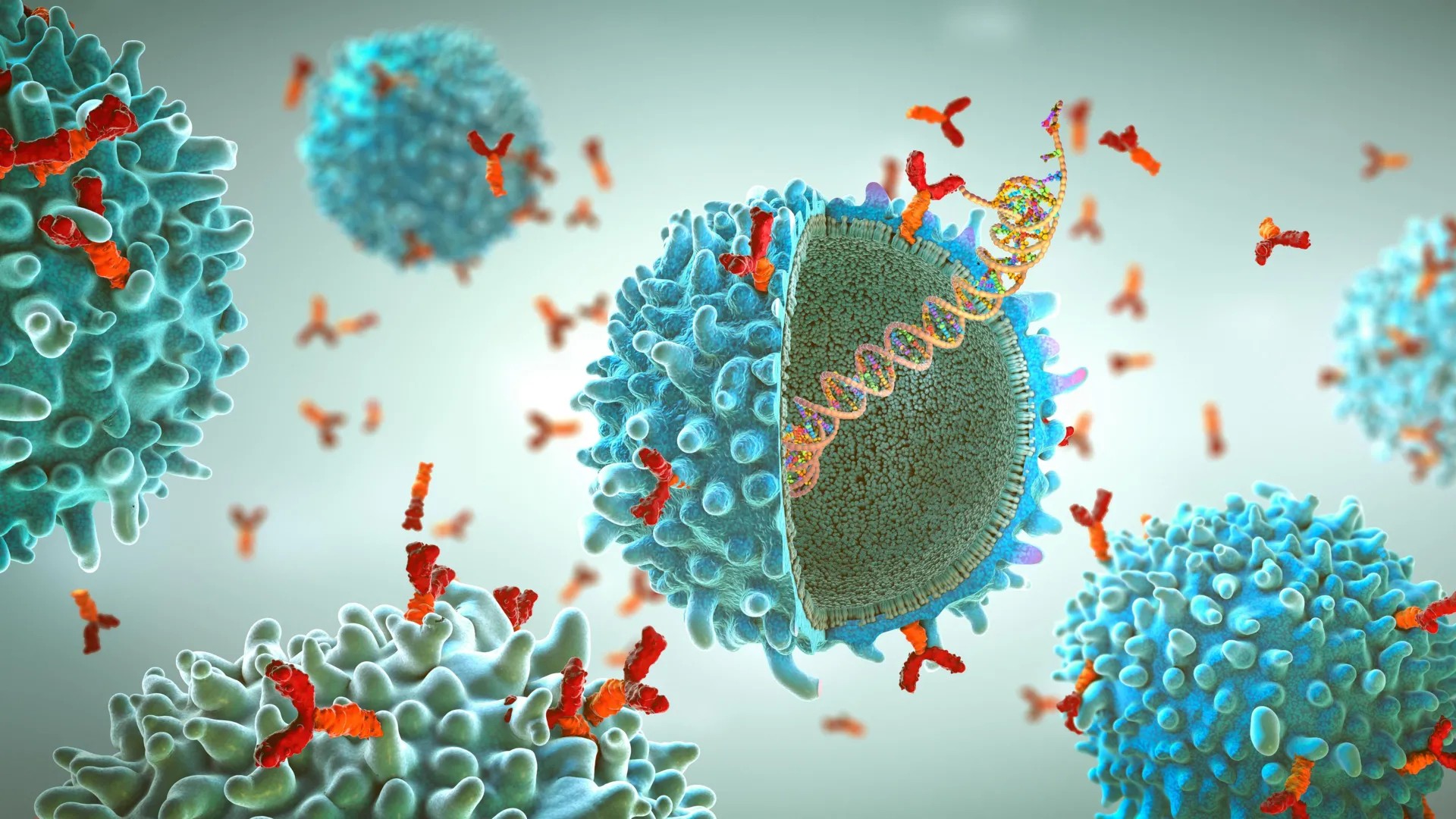
In a live virus, surface proteins are not floating freely; they are embedded within a lipid (fatty) membrane. This membrane dictates the protein’s shape, stability, and how it interacts with the human immune system.
Traditionally, vaccine research relied on “truncated” proteins—versions of the virus stripped of their membrane-anchoring components. This approach had several drawbacks:
– Structural distortion: Proteins may not fold or behave as they would in a real virus.
– Hidden targets: Many potent antibodies target the area where the protein meets the membrane. If the membrane is gone, these antibodies have nothing to bind to in the lab, making them appear ineffective when they are actually highly protective.
The Solution: Nanodiscs as Molecular Mimics
The new research, published in Nature Communications, utilizes nanodiscs —tiny, stable patches of lipids that act as artificial membranes. By embedding viral proteins into these nanodiscs, researchers can recreate a “near-native” environment.
This platform offers several transformative advantages:
– High-Resolution Accuracy: It allows for detailed structural views of how antibodies interact with proteins at the membrane interface.
– Efficiency: The platform streamlines complex processes. Tasks that previously took a month or more can now be completed in approximately one week, allowing for much faster testing of various vaccine candidates.
– Versatility: The team successfully applied this method to both HIV and Ebola, proving the technology is not limited to a single pathogen.
Unlocking New Defensive Mechanisms
Using HIV as a primary case study, the researchers focused on a specific, stable region of the virus’s surface protein. This region is a “holy grail” for vaccine designers because it remains consistent even as the virus mutates, making it a prime target for broad-spectrum immunity.
With the nanodisc platform, the team discovered that certain antibodies neutralize the virus by disrupting the structural connection between the protein and the membrane. This level of detail was previously invisible, providing a new roadmap for designing vaccines that can trigger these specific, highly effective immune responses.
Beyond HIV and Ebola: A Universal Tool
The implications of this technology extend far beyond the current study. Because the platform is designed to work with membrane-bound proteins, it could be applied to a wide range of other infectious threats, including:
– Influenza
– SARS-CoV-2 (COVID-19)
– Other emerging membrane-enveloped viruses
Beyond just looking at structures, the nanodiscs can act as “molecular bait.” Scientists can use them to capture and isolate immune cells that react to specific viral proteins, providing a much clearer picture of how a potential vaccine will perform in the human body.
“This gives the field a more realistic, accurate way to test ideas early on,” says William Schief, co-senior author and executive director of vaccine design at IAVI’s Neutralizing Antibody Center.
Conclusion
By recreating the natural environment of a virus through nanodisc technology, researchers have provided a powerful new lens to view viral defenses. This platform does not create a vaccine itself, but it provides the high-fidelity data needed to design the next generation of vaccines against the world’s most challenging diseases.