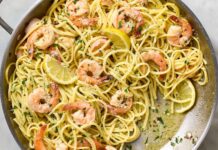




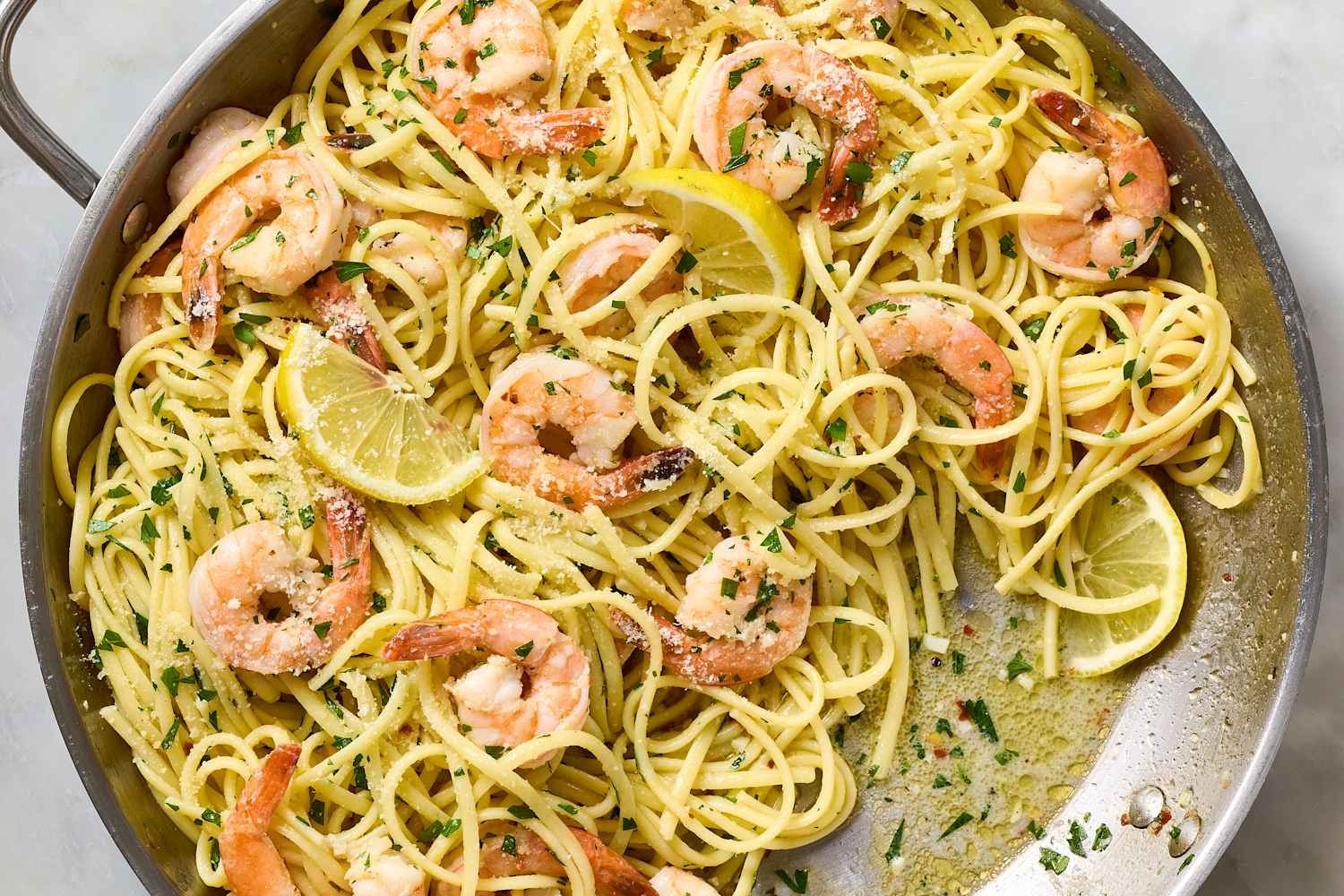
If you are looking for a restaurant-quality dinner that doesn’t require hours of kitchen labor, this Lemon Garlic Shrimp Linguine is the ideal solution. By focusing on high-impact, quick-cooking ingredients, you can move from prep to table in just 30 minutes.
This recipe is designed with a specific culinary philosophy: let the protein shine. Rather than burying the shrimp under heavy creams or aggressive spices, this dish uses a bright, velvety sauce to highlight the natural sweetness of the seafood.
Зміст
⏱️ Recipe Overview
- Total Time: 30 minutes (15 min prep | 20 min cook)
- Servings: 4
- Difficulty: Easy/Beginner-friendly
- Key Profile: Bright, citrusy, and buttery with a hint of garlic.
🛒 Essential Ingredients & Pro Tips
To achieve the best results, the quality of your ingredients matters more than the complexity of the technique.
The Protein: Shrimp
For this dish, use large, peeled, and deveined shrimp.
Editor’s Tip: Look for “IQF” (Individually Quick Frozen) shrimp. Because these are frozen immediately after being caught, they are often significantly fresher than the “fresh” shrimp sitting on a seafood counter, which may have been previously frozen and thawed.
The Pasta: Linguine
Linguine—meaning “little tongues”—is a flat, oval-shaped pasta. It is the perfect middle ground between spaghetti and fettuccine, providing enough surface area to catch the silky sauce without overwhelming the delicate shrimp.
The Flavor Boosters
- Fresh Lemon Juice: Avoid bottled juice at all costs. Bottled versions are often bitter and preservative-heavy; fresh lemon provides the necessary acidity to “cut” through the butter and brighten the dish.
- Parmesan Cheese: This adds a savory, salty depth that complements the brininess of the shrimp and helps emulsify the sauce.
- Pasta Water: Never drain your pasta completely! The starchy water is the “secret ingredient” that helps the sauce cling to the noodles.
👨🍳 Step-by-Step Instructions
1. Prepare the Pasta
Bring a large pot of water to a boil and add plenty of salt. Cook the linguine for about 2 minutes less than the package suggests (slightly under al dente ).
Crucial Step: Before draining, reserve at least 1 cup of the starchy pasta water.
2. Sear the Shrimp
Pat the shrimp very dry with paper towels—this ensures a good sear rather than steaming. Season with salt, pepper, and garlic powder. Heat olive oil in a large skillet over medium-high heat and cook the shrimp for 1–2 minutes per side until just opaque. Remove them from the pan and set aside on a plate.
3. Build the Sauce
Reduce the heat to medium. In the same skillet, melt butter with olive oil. Add minced garlic (and red pepper flakes if you want a tiny kick) and cook until fragrant (about 30–60 seconds). Stir in the reserved pasta water and fresh lemon juice, bringing the mixture to a gentle boil.
4. The Final Toss
Add the cooked linguine to the skillet. Toss continuously, adding more pasta water if needed, until the sauce thickens and coats the noodles. Remove from heat, fold the shrimp (and any juices from the plate) back into the pan, and add fresh parsley and Parmesan cheese.
💡 Customization & Storage
- Protein Swaps: This sauce base is incredibly versatile. You can easily substitute shrimp with scallops, clams, or even sliced chicken breast.
- Pasta Swaps: If you don’t have linguine, any long pasta like spaghetti or fettuccine will work perfectly.
- Storage: If you have leftovers, store them in an airtight container in the refrigerator for up to 2 days. Note that the pasta may absorb more sauce as it sits; a splash of water or butter when reheating can revive the texture.
Final Thought: This dish proves that sophisticated dining doesn’t require a long grocery list or complex techniques; it simply requires respecting your ingredients and timing your cook perfectly.