



I grew up in an era where “easy Thai dinner” was code for sludge from a jar. You’d open a packet of mystery spice mix or a brick of curry paste that had been sitting in the back of the pantry since the Bush administration. It was quick, sure. But it wasn’t good.
We’ve evolved.
Today, fast food at home isn’t about shortcuts; it’s about strategy. It’s having three key ingredients in your fridge and knowing how to use them to extract maximum flavor in twenty minutes. The difference between a mediocre meal and a meal that stops your night in its tracks comes down to technique. Not patience. Technique.
Below are ten recipes ranging from authentically Thai to loosely inspired. They rely on the holy trinity of Thai home cooking: chili paste, fish sauce, and aromatics. Some are soups. Some are stir-fries. All of them work on a Tuesday night when you’re exhausted and hungry.
Зміст
Red Curry Stir-Fry With Green Beans
Start with seven ingredients. That’s it. Pre-made Thai red curry paste is your anchor here. You don’t need to grind your own spices if you’re short on time. Toss in green beans. Stir-fry until they’re crisp-tender.
The beauty of this method is its flexibility. Run out of chicken? Swap it for shrimp. No green beans? Snap peas. The base remains solid.
If you have leftovers, do not waste them. Add cooked rice and a fried egg. Instant fried rice.
This is the entry point. It’s reliable. It’s fast. It tastes like you cared.
Khua Kling Gai: The Dry Curry Method
Most people think Thai cooking equals a wok on fire. High heat. Smoke. Wok hei.
This recipe rejects that dogma. It’s a dry curry from Southern Thailand. The secret? Dry-roasting.
You’re not stirring aggressively. You’re scraping. The minced chicken and curry paste stick to the pan. You fight them. Constant scraping prevents burning and actually binds the meat to the spices. Lemongrass. Makrut lime leaves. Fresh red chiles. The result is intensely aromatic without a drop of liquid. It’s concentrated flavor. Heavy. Rich. Different.
Classic Gaeng Khiao Waan (Thai Green Curry)
This is the one most people picture when they think “Thai food.” Bright. Spicy. Green.
You don’t need to make paste from scratch. A quality store-bought or homemade paste works fine. Fry it in a little oil to wake up the aromatics, then add coconut milk. The milk mellows the heat and carries the flavor.
Season with palm sugar and fish sauce. Those are the non-negotiables. Then drop in chicken thighs. Simmer. The chicken stays juicier in thigh cuts. Add makrut lime leaves at the end. Don’t skip the lime leaves. They provide the citrus note that makes green curry distinct from just “spicy soup.”
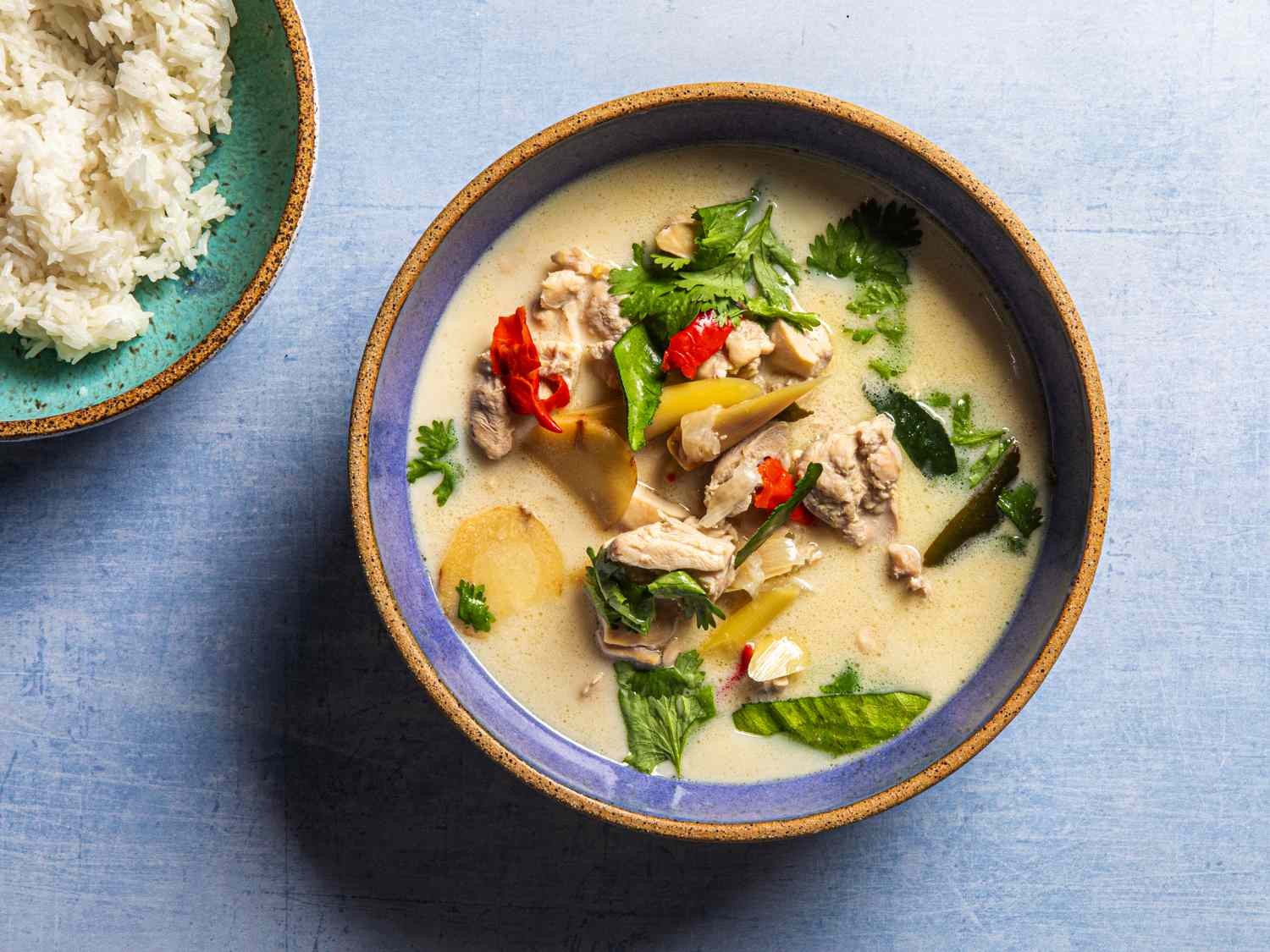
Tom Kha Gai (Coconut Chicken Soup)
Why is this always on every Thai menu? Because it’s comfort food perfected.
The texture is key. Creamy from coconut milk. Sour from lime. Salty from fish sauce. Savory from galangal.
If you’re making this, don’t just toss chopped galangal in the pot. Pounding it in a mortar and pestle releases the essential oils. It changes the broth from watery to complex. Add aromatics in stages. Build the flavor profile layer by layer. It takes longer than a stir-fry, but the reward is a bowl that feels like a hug.
Kaeng Kari Kai (Yellow Curry)
Green and red get all the attention. Yellow is the quiet uncle.
It’s milder. Aromatic. Turmeric-forward. Ideal for kids or people who want flavor without the burn.
But there’s a trap. Not all yellow pastes are created equal. Look for “karee” or “kari” on the label. Avoid the ones loaded with curry powder blends that taste like British curries. You want the Thai version. Coconut milk thins it out. Chicken thighs slow-cook until they fall apart. It’s straightforward. It’s consistent.
Sheet-Pan Chicken with Peanut-Lime Sauce
One pan. That’s the selling point.
Red curry paste, coconut milk, peanut butter. Lime juice. Fish sauce.
Mix it into a sauce. Coat chicken breasts and vegetables. Roast until charred. The sauce becomes a glaze. The vegetables caramelize.
Top it with a relish. Fresh cilantro. Roasted peanuts. This adds crunch to a soft dish. It’s satay-inspired without the skewers or the grill. It’s for when you have zero interest in cleaning dishes.
Grilled Turmeric Chicken (Gai Yang)
Grilling a whole chicken takes too long for a weeknight. Skewers take twenty minutes.
The marinade does the heavy lifting. Turmeric stains the chicken gold. Garlic. White pepper. Cilantro root. That root is non-negotiable if you can find it—it has a pungent, herbal brightness that stems lack.
Marinate. Skewer. Grill. High heat gets the char. Low heat cooks the meat. Don’t burn it. Serve with sticky rice. Simple.
Pressure Cooker Green Curry With Squash
Speed isn’t just about prep time. It’s about cook time.
A pressure cooker does what a stove takes forty minutes to do, but in twenty.
Start by frying the aromatics and paste in the pot. This builds depth. Add chicken. Add vegetables. Eggplant. Kabocha squash. The squash breaks down, thickening the sauce naturally. You don’t need cornstarch. The squash starch does the job.
Tender chicken. Creamy sauce. Less monitoring required. It’s efficient cooking.
20-Minute Red Curry Noodle Soup
Sometimes you want soup without the simmer.
Use jarred red paste. Use store-bought broth. Use dried rice noodles.
Fish sauce. Sugar. Lime juice. The seasoning trio. Add chicken breast. Shred it. Or cook it whole and slice it thin. The noodles absorb the broth. The curry paste disperses. You get the hot, sour, salty, sweet profile in minutes.
It’s a cheat code dinner. But it tastes like real food because the seasoning is balanced correctly.
Thai Chicken Satay
The marinade is bright. Pungent. Turmeric, lemongrass, lime, sugar, fish sauce.
It infuses the chicken quickly. You don’t need hours. A few hours is enough.
Grill it. Char it.
The sauce is where people often fail. It needs to be sweet, spicy, and creamy. Coconut milk. Peanut butter. A hit of chili. Balance is everything here. Too sweet? Add lime. Too spicy? Add more peanuts.
Serve with cucumber relish. It cuts the richness of the peanut sauce.
The Takeaway
You don’t need a culinary degree to cook good Thai food at home. You need a few specific ingredients. Fish sauce. Curry paste. Lime. Lemongrass.
Learn those. Stock them. Use them.
The recipes above prove that fast doesn’t mean boring. It just means efficient. The flavor comes from the ingredients and the heat, not from hours of simmering. Pick one. Cook it tonight. See the difference.