





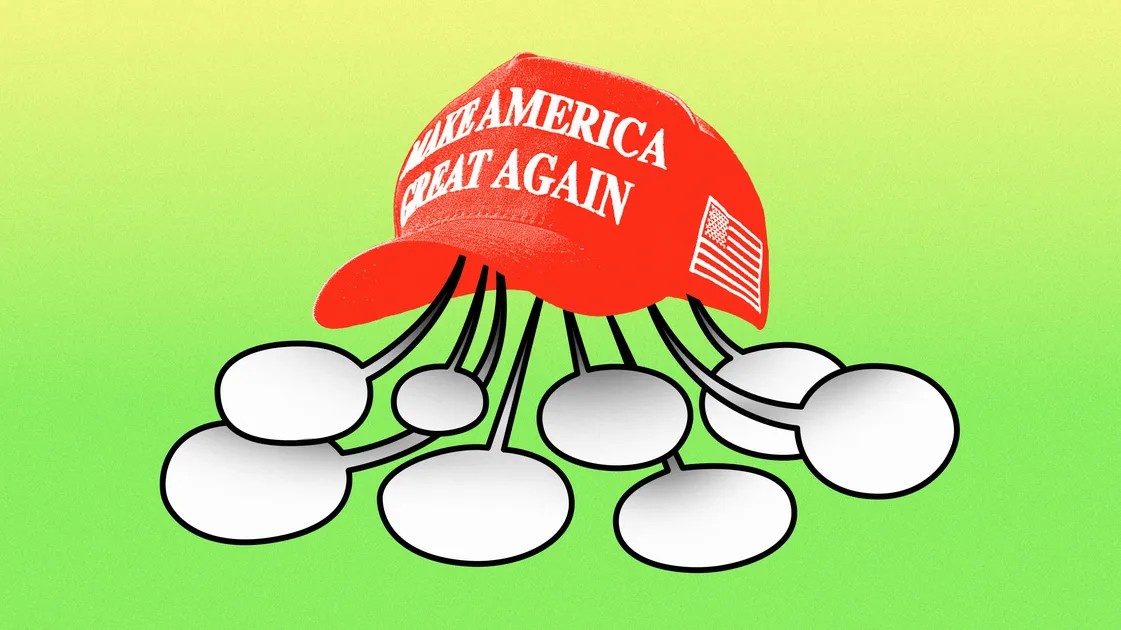
While the bright red “Make America Great Again” hats and oversized yard signs are unmistakable symbols of Donald Trump’s movement, much of the political messaging is far more subtle. As social and economic tensions rise—driven by factors ranging from fluctuating gas prices to polarizing foreign policy—many supporters are moving away from overt displays of affiliation in favor of “coded” language.
Political analysts and content creators suggest that these phrases act as dog whistles : subtle linguistic cues that signal specific ideologies to an “in-group” while remaining seemingly innocuous to the general public. Understanding these phrases is essential to understanding the broader cultural and legislative shifts currently moving through the United States.
Зміст
The Language of Dismissal and Defense
One of the most common ways coded language manifests is through the deflection of factual information.
- “I don’t know about all that”: Experts note that this phrase is frequently used to shut down uncomfortable conversations. When presented with statistics or evidence that contradicts a specific worldview, this response allows a speaker to discredit the information without having to engage with the facts. It serves as a conversational “stop sign,” often used when a person lacks the tools or desire to debate the underlying evidence.
Reclaiming “Values” and Social Roles
Several phrases used within the movement aim to frame specific social hierarchies as moral imperatives.
“Traditional Family Values”
On the surface, advocating for family is a universal concept. However, analysts argue that in a political context, this phrase often functions as a placeholder for anti-LGBTQ+ rhetoric. It is frequently used to promote strict gender hierarchies—such as the “submissive wife/dominant husband” model—and has become increasingly intertwined with white Christian nationalism. This language often serves as the ideological foundation for policies targeting reproductive rights and transgender rights.
“Marry a Provider”
A more recent trend appearing on social media involves the phrase “marry a provider.” Often used in response to discussions about women’s burnout or the pressures of modern capitalism, this rhetoric suggests that women should trade economic independence for financial security provided by a man. Critics argue this ignores systemic issues—like the lack of paid family leave or universal childcare—and instead promotes a return to traditional patriarchal structures.
Challenging Progress through “Merit” and “Protection”
The movement also utilizes language that seeks to reframe civil rights progress as a loss of fairness for the majority.
- “DEI Hire” vs. “Merit-Based System”: The term “DEI hire” (referring to Diversity, Equity, and Inclusion) is often used to disparage the qualifications of minority professionals. By framing diversity initiatives as a threat to a “merit-based” system, the language attempts to delegitimize efforts to increase representation for Black, Brown, disabled, and female professionals in historically white-dominated spaces.
- “Protect Women”: While this sounds like a universal humanitarian goal, in modern political discourse, it is often used as a coded way to advocate for anti-trans legislation. By framing the conversation around “protecting women,” the movement can “other” transgender individuals, often leveraging the fact that many people have little to no direct personal interaction with the trans community, making them more susceptible to media-driven narratives.
The Power of Fear-Based Rhetoric
The common thread linking these phrases is their reliance on emotional resonance rather than nuance. By utilizing “fear of the other,” these coded terms tap into deep-seated anxieties about changing demographics, shifting social norms, and economic instability.
This strategy is highly effective in digital spaces, where short, punchy, and emotionally charged phrases can spread more rapidly than complex policy discussions. Whether through subtle dismissals or overt attacks on identity, this language shapes how voters perceive “outsiders” and, ultimately, how they vote on the laws that govern them.
Conclusion: The use of coded language in the MAGA movement serves to bypass direct debate, allowing supporters to signal ideological alignment through subtext. By framing political shifts as defenses of “values” or “merit,” these phrases help turn cultural anxieties into actionable political and legislative momentum.