




Finding the perfect balance in sheet-pan cooking is notoriously difficult. The fundamental challenge lies in a conflict of timing: high-heat proteins like chicken thighs require extended time to render fat and crisp the skin, while delicate spring vegetables like asparagus and radishes can quickly turn to mush if overexposed to heat.
Developed by Isabelle Easter in a Birmingham, Alabama, test kitchen, this recipe offers a strategic solution to this common culinary dilemma, resulting in a bright, seasonal meal that maximizes flavor through smart technique.
The Technique: Strategic Timing and Placement
The success of this dish relies on a two-stage cooking process designed to respect the different thermal needs of each ingredient. Rather than tossing everything into the oven at once, the recipe employs a method used to ensure texture integrity:
- The Initial Sear: The chicken thighs begin the process alone. By spreading them across the entire sheet pan, you allow hot air to circulate freely around each piece. This prevents steaming and ensures the fat renders properly, leading to golden, crispy skin.
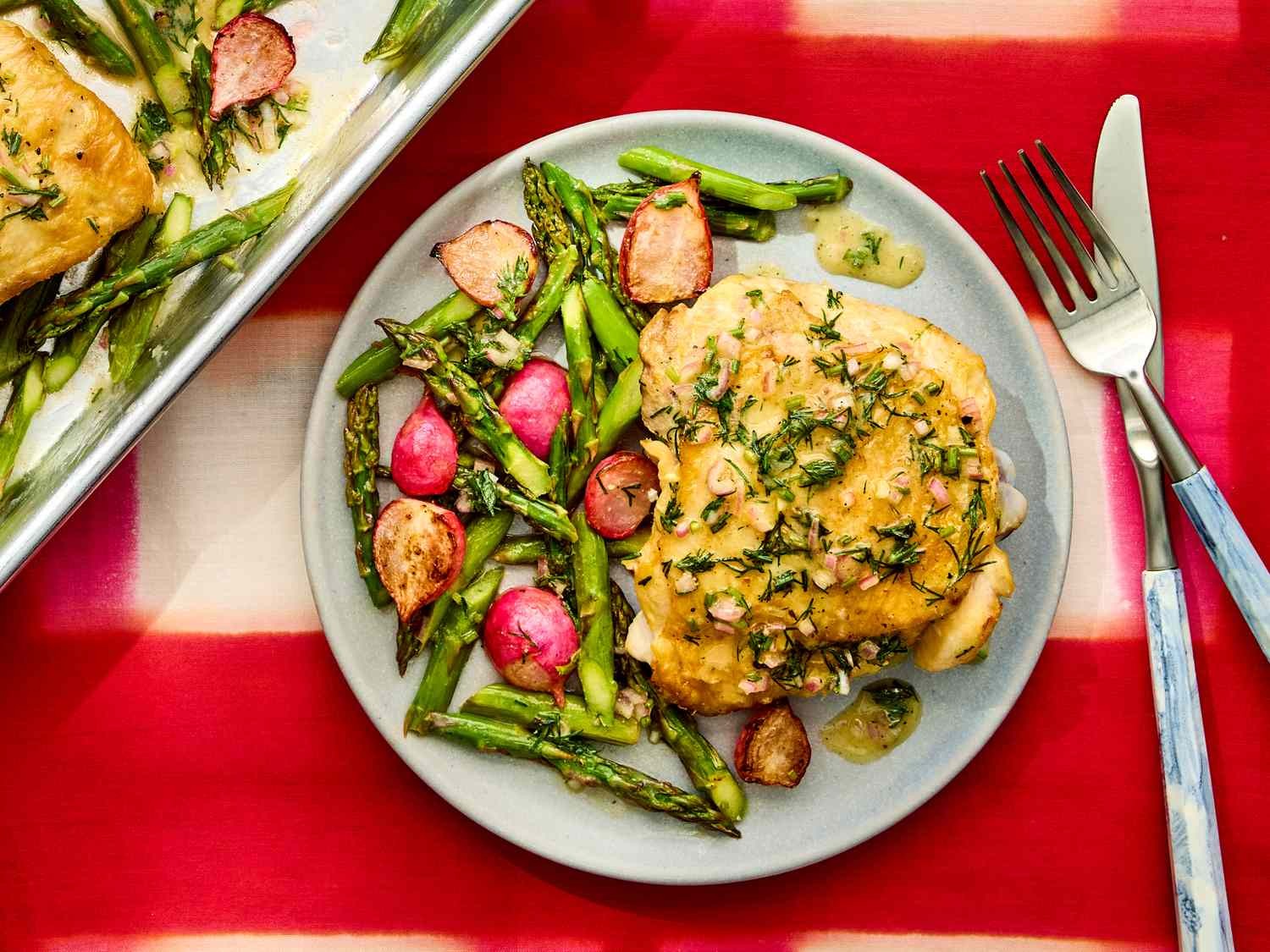
- The Vegetable Integration: Once the chicken is partially cooked and the skin has achieved its desired color, the thighs are moved toward the center of the pan. This creates space to introduce the asparagus and radishes.
- Flavor Synergy: By adding the vegetables later, they cook just long enough to become tender without losing their structure. Furthermore, the vegetables benefit from being roasted in the rendered chicken fat, which adds deep, savory notes to the spring produce.
Bright Spring Flavors
The recipe is designed to be light and refreshing, making it an ideal weeknight option for the spring season. Key components include:
- Roasted Lemon Halves: Instead of using raw juice, lemon halves are roasted alongside the chicken. The heat softens the fruit and mellows the acidity, creating a sweeter, more complex juice.
- Herb-Packed Vinaigrette: The roasted lemon juice is transformed into a sharp, bright vinaigrette that ties the heavy protein and the light vegetables together.
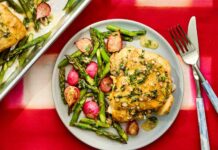
- Seasonal Produce: The combination of earthy asparagus and peppery radishes provides a textural contrast to the rich, juicy chicken.
Why This Matters for Home Cooks
This recipe is more than just a meal; it is a lesson in thermal management. Most “one-pan” recipes fail because they treat all ingredients as having equal cooking times. By mastering the art of “staggered roasting”—starting with the protein and finishing with the produce—you can achieve restaurant-quality textures (crispy skin and al dente vegetables) using a single piece of cookware.
This approach transforms a simple sheet-pan dinner from a potential mushy mess into a sophisticated, multi-textured meal that celebrates seasonal ingredients.