




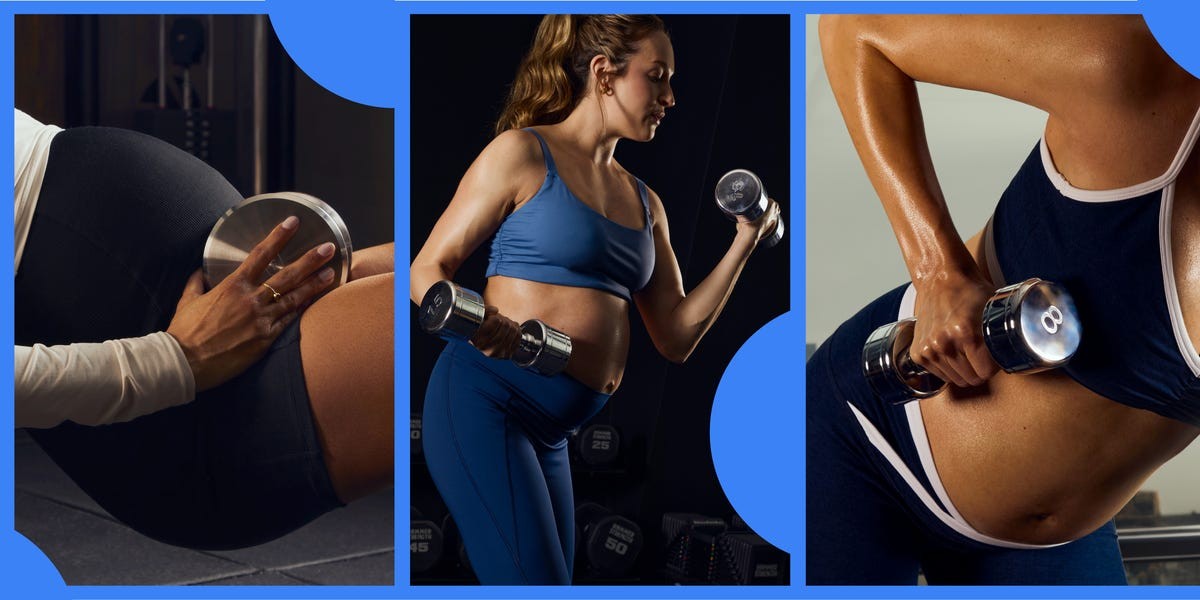
While many expectant parents focus on preparing the nursery or assembling strollers, there is another essential preparation for motherhood: strength training.
While low-impact cardio like walking and swimming is beneficial, lifting weights offers unique advantages. Beyond general fitness, strength training serves as a functional tool to prepare the body for the physical rigors of labor, childbirth, and the daily demands of caring for a newborn.
Зміст
Why Strength Training Matters
As pregnancy progresses, a person’s center of gravity shifts, often leading to discomfort. Incorporating resistance training can provide several key benefits:
– Pain Reduction: Helps mitigate discomfort in the hips, back, and pelvis.
– Postural Support: Strengthens the muscles needed to counteract the physical changes of a growing belly.
– Core & Pelvic Health: Improves the function of the pelvic floor and core, which is vital for both pregnancy and postpartum recovery.
– Mental Readiness: Builds the confidence and mental resilience required for the transition into motherhood.
The Philosophy: Functional Over Specialized
The most effective approach to prenatal fitness is not about finding “specialized” or “fragile-friendly” exercises. Instead, it relies on foundational movements that most people already know: squats, hinges, rows, presses, and carries.
The goal is not to reinvent the wheel, but to use smart programming. This means adjusting the weight (load management) and modifying movements to accommodate a changing body while maintaining the core principles of strength.
Debunking the “Coning” Myth
For years, fitness advice warned pregnant individuals to avoid “coning” or “doming”—a visible bulge along the midline of the abdomen during exertion. The prevailing belief was that this caused diastasis recti (abdominal separation).
However, modern, evidence-based guidance suggests a different perspective:
“We have no evidence to suggest that coning is dangerous or makes abdominal separation worse.” — Sheridan Skye, Registered Nurse and Fitness Coach
What you should know about coning:
– It is natural: 100% of women will experience some degree of abdominal separation during pregnancy as the linea alba (the connective tissue in the abdomen) stretches to accommodate the uterus.
– It is feedback, not a failure: If you see coning, it is simply a signal that your core is struggling to manage internal pressure.
– How to respond: If coning occurs without pain or pelvic floor strain, you don’t necessarily need to stop. However, you may choose to modify the movement or reduce the weight to ensure you stay “connected” to your core.
How to Structure Your Workouts
There is no “perfect” routine; the best program is the one that meets you where you are each day. Use the following templates to build your own sessions:
🏋️ Full-Body Workout
Best for general maintenance and efficiency.
– Selection: 1–2 lower-body moves, 1–2 upper-body moves, and 1–2 core or “carry” exercises.
– The Mix: Ensure you include a squat/lunge, a hinge (like a deadlift), a push, a pull, and a carry.
– Volume: 2–3 sets of 8–12 reps (or 30–60 seconds for holds).
– Intensity: Aim for a 6 to 8 out of 10 effort level.
💪 Upper-Body Focus
Best for building strength for carrying and lifting a baby.
– Selection: 3–5 upper-body exercises.
– The Mix: Must include at least one “push” (press/pushup) and one “pull” (row/pulldown).
– Volume: 2–3 sets of 8–12 reps.
– Intensity: Weights should feel challenging but must not compromise your form or stability.
🦵 Lower-Body Focus
Best for pelvic stability and hip strength.
– Selection: 3–5 lower-body exercises.
– The Mix: A variety of squats, hinges, and single-leg work (lunges or step-ups).
– Volume: 2–3 sets of 8–12 reps.
– Intensity: Focus on control, especially with single-leg moves. Prioritize breathing—avoid holding your breath or “bearing down.”
🧘 Core & Pelvic Floor Focus
Best for targeted stability and postpartum preparation.
– Selection: 2–4 core movements paired with 2–3 general strength exercises.
– Volume: 2–3 sets of 6–10 controlled reps (or 20–45 seconds for holds).
– Key Principle: Prioritize quality over quantity. Move slowly and stop before fatigue causes you to lose control of your posture or breathing.
Summary: Strength training during pregnancy is about functional preparation; by using foundational movements and listening to your body’s feedback, you can build the physical resilience necessary for both childbirth and the demands of motherhood.