





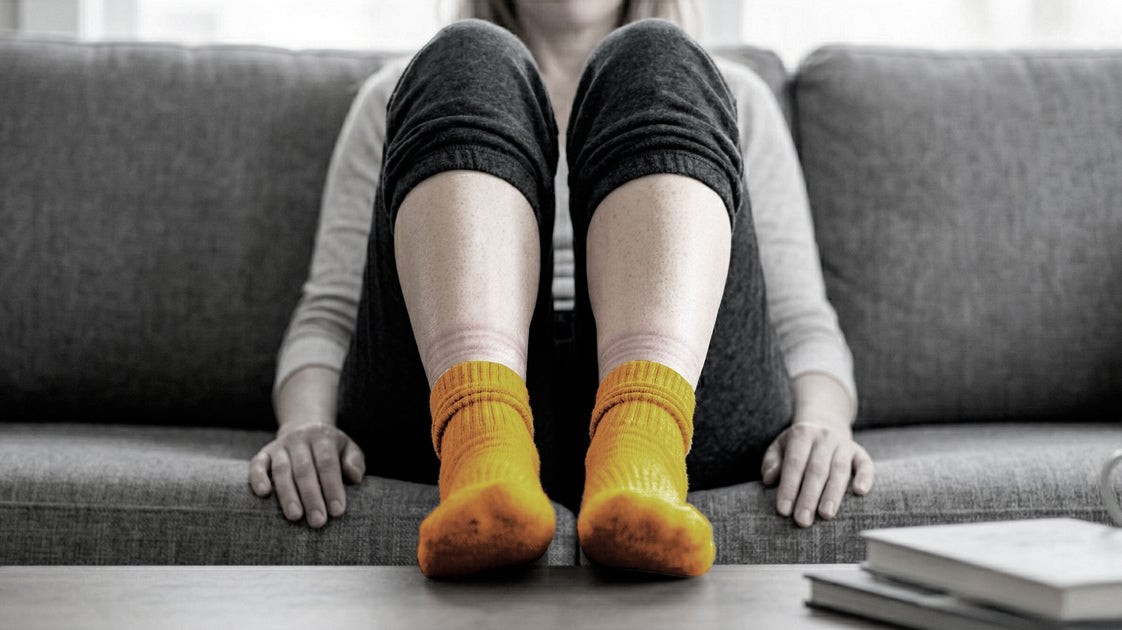
Indentations on your ankles after taking off your socks. We’ve all seen them. Usually, you glance down, shrug, and keep scrolling.
But what if those lines aren’t just a fashion faux pas? What if they’re a signal?
Most of the time, sock marks on legs are harmless. They are the physical receipt of gravity, long hours, or a salty dinner. But sometimes, they are the first clue that your veins, heart, or kidneys are struggling to keep up.
Here is how to tell the difference between “my socks are tight” and “call a doctor.”
Зміст
Why do sock lines appear in the first place?
Let’s start with the boring stuff. Because most of it is boring.
Dr. Katherine Teter, a vascular surgeon, notes that these marks are incredibly common. If you spend your day sitting in an office chair or standing in an operating room, your blood pools in your lower extremities. Gravity is not a suggestion; it’s a law.
“Blood’s going to pool in our legs,” says Dr. Brintha Vasagar. “It makes a lot of sense.”
If you are not sitting or standing all day, the culprit is often simpler.
- Tight socks. They press in. You get marks. End of story.
- Dehydration. When your body lacks fluid, it hoards what it has. Fluid pools in the legs. Swelling occurs. Marks deepen.
- Sodium overload. A heavy restaurant meal spikes your sodium. Water follows salt. Your ankles swell. Your socks leave impressions.
For most people, this is it. No panic required. Just drink water, eat less salt, and maybe loosen the top of your socks.
When should you worry about sock marks on legs?
The marks themselves aren’t the enemy. It’s what else is happening on your body.
If the indentations come with other symptoms, the stakes get higher. Watch for these red flags.
1. One-sided swelling
Your body likes symmetry. It wants balance. If the sock mark is only on one leg, or significantly deeper on the left than the right, something is off.
Dr. Vasagar points out that asymmetry is usually a sign that a system is failing or blocked on one side.
2. Changes over time
Did you notice the marks yesterday? Fine. But if they get deeper week after week, or stay indented for hours after you remove the socks, pay attention.
Progressive worsening can indicate serious underlying conditions. Heart failure and kidney disease often manifest through worsening fluid retention.
3. Vein distress
Look at your ankles. Is there hyperpigmentation (darkening of the skin)? Do you see large varicose veins? Do your legs feel heavy, achy, or tired after standing, only to feel better when you elevate them?
These are classic signs of venous insufficiency. The valves in your veins are leaking. The blood isn’t moving up. It’s staying down.
4. Shortness of breath
If your legs are swelling and you also have trouble lying flat in bed or feel out of breath, stop reading and see a doctor.
This combination can point to heart failure. The heart isn’t pumping efficiently, fluid backs up into the lungs and legs.
Is it a blood clot?
Many people jump to the worst-case scenario immediately. They see a mark and think Deep Vein Thrombosis (DVT).
Dr. Teter says you can probably stop worrying about that.
Blood clots rarely present as silent sock marks. A clot is violent. It brings pain. It brings significant, substantial swelling of the calf. It often brings redness.
If you had a clot, you would feel it. You wouldn’t just see an indent in the morning.
“In general, blood clots don’t just happens in the absence of symptoms,” Teter says.
If you suspect a clot, go to the ER. If you just see a line and feel fine, you likely don’t have a clot.
Which socks are best for leg health?
Comfort is king. Fit is queen.
You do not need expensive tech gear to be healthy. But for some lifestyles, compression socks are a game-changer.
Dr. Teter wears them nearly every day. She stands for hours in the OR. Her circulation is normal, but her legs get tired. Compression socks prevent the fluid from settling in the first place. She ends the day feeling lighter.
Who else benefits?
* People who stand all day.
* People who sit all day (office workers).
* Long-distance flyers.
Dr. Vasagar compares it to air travel advice. Sit for six hours? Wear compression stockings. Walk every two hours.
Do that at your desk job too. Get up. Move. Let gravity reset.
How to reduce sock lines naturally
If you don’t have a heart condition, kidney disease, or venous insufficiency, you can fix this at home.
- Elevate. Lie down. Put your legs above your heart. Let gravity work in your favor.
- Exercise. Muscle contractions pump blood back up the legs. Sedentary living is the enemy of circulation.
- Watch your salt. Less sodium means less water retention.
- Hydrate. It sounds counterintuitive, but drinking more water helps your body shed excess fluid.
If you do all this and the marks remain—especially if they are stubborn, deep, or asymmetrical—make an appointment.
Not because you’re dying. But because it’s good to rule out the serious stuff.
Better to know.
The body talks. Sometimes it whispers. Sometimes it just leaves an impression on your ankle.