




Forget everything you know about the single solitaire ring. That minimalist, clean aesthetic is officially on its way out. As spring approaches, Parisian terraces are whispering a different secret. It isn’t about buying new. It’s about looking at what you already own in a radically different way.
One simple change to how you wear your jewelry can make your fingers appear impossibly long. No new purchases required.
Зміст
The End of the Single Solitaire
The era of the “one ring to rule them all” is winding down. The iconic standalone piece is losing its throne. In its place? A bold, audacious accumulation of rings.
This isn’t just a trend. It’s a stylistic revolution for spring 2026. The goal is simple: dress your hands with ease. And do it without wasting a dime.
It’s eco-chic by necessity. You’re recycling old treasures with a bit of mischief. The spirit is one of responsible consumption. But the result is pure style.
“Agile stacking reimagines how we dress our hands, turning clutter into an optical illusion of grace.”
The Optical Illusion of Verticality
Here is the trick that nobody sees coming. Superposition.
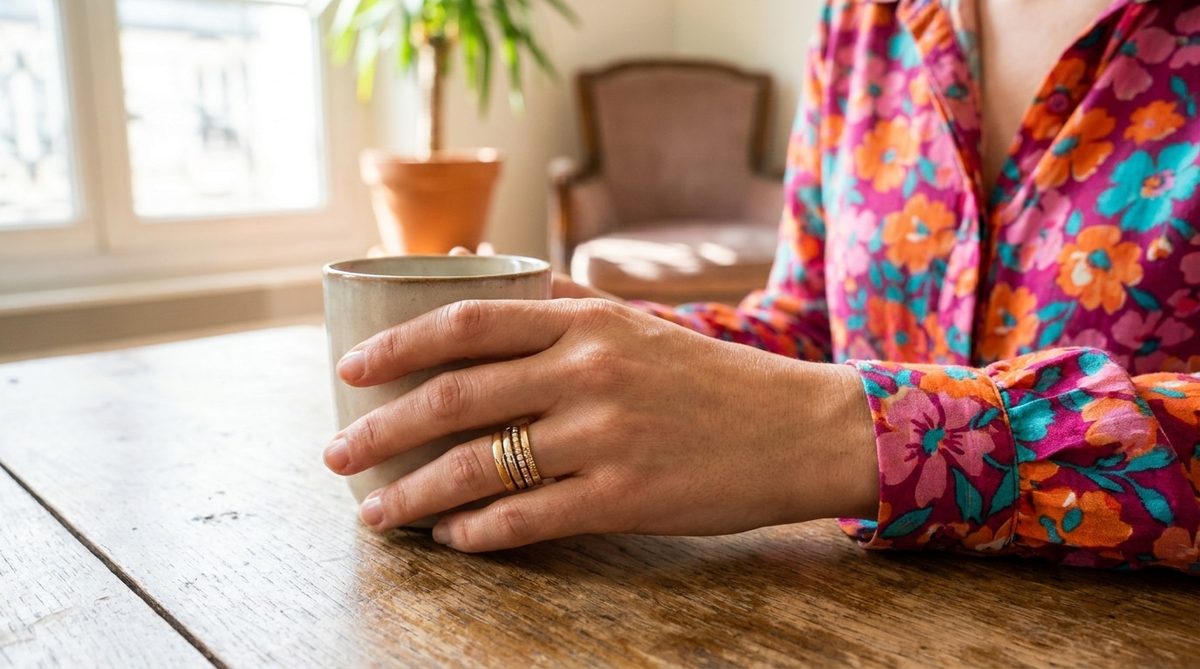
Placing multiple elements on a single axis creates a powerful sense of verticality. Your eye doesn’t stop. It glides. It travels up and down the phalange in a fluid, continuous motion.
This creates a paradox.
Most people think that cluttering a finger makes it look short. The opposite is true. Grouping jewelry on one digit exaggerates delicacy. It lengthens the visual line. It confers a strange, elegant grace to the hand.
It’s not about volume. It’s about direction.
The Parisian Rule: Three to Five
How do you avoid looking like you lost a ring contest? There is a mystery rule among Parisiennes. It’s precise.
Aim for three to five rings.
This specific number is the key. It preserves the elegance of the finger. It prevents the skin from being buried under heavy metal. Too few? Boring. Too many? Overwhelming.
Three to five is the sweet spot.
Which finger should you choose?
Strategy matters. Don’t scatter rings everywhere. Pick a single target.
The ring finger. The middle finger. Just one.
This concentrates attention. It creates a focal point. It looks refined because it’s intentional. You aren’t just wearing rings. You are styling a hand.
Thin Is In. Thick Is Out.
Success depends on the profile of the rings.
You must select ultra-fine pieces. This is non-negotiable.
Thick bands. Wide settings. Massive stones. These destroy the visual benefit. They break the vertical flow. They create visual weight that drags the hand down.
Ultra-thin rings allow the eye to travel uninterrupted. They layer without clashing. They create that seamless upward movement.
So, dig through your jewelry box. Find those thin bands you’ve ignored for years. Stack them. Pick one finger. Stop buying singles.
The hands are ready. Are you?
Why chunky rings make fingers look shorter
Big, heavy jewelry doesn’t just sit on your hand; it changes the visual weight of your entire hand. When you wear a statement ring that covers too much surface area, it can actually make your fingers appear stouter and shorter. That’s a problem if you are trying to achieve length. It is the perfect excuse to dig through your jewelry box. You need to exhume those delicate, thin rings you haven’t worn since last spring. They are waiting to be rediscovered.
The art of the messy stack
There is a specific vibe you want here. It isn’t sloppy. It is faux-négligé. It looks like you threw them on in a hurry, but you spent twenty minutes perfecting the balance. This style breaks old rules. It demands that you stop fearing contrast.
Mixing gold and silver without looking cluttered
Old rules said gold and silver must never touch. Forget that. Combining warm tones with cool tones actually refreshes the look. It makes the metal pop against your skin tone rather than blending in. If you stick to one metal, it can look static. Mixing them adds movement.
Playing with texture for light catch
A smooth band is fine. But a hammered texture? That catches the light differently. So does a stone setting. When you mix smooth, polished metal with rough, hammered surfaces and small, bright accents, you create depth. The light hits those varied surfaces differently. It gives your hand a subtle, shimmering intensity that flat metal just cannot achieve. This is especially effective in spring and summer light.
How to stack rings correctly
You don’t need to be a stylist. You just need a method.
- Sort your metals. Keep your familiar golds together and your silvers together. Don’t force a random mix yet.
- Pick three to five rings. Go for thin, filigree, or delicate bands. Avoid anything wide or bulky.
- Slide them on. Start with one, add the next. Don’t overthink the order. They should sit snugly but comfortably.
Wearing this look every day
This technique works for everything. It elevates a crisp white button-down for the office. It also works with a flowy summer dress. It’s versatile because it is understated. You aren’t shouting for attention. You are whispering style.
Changing small habits changes how you carry yourself. Dropping the big ring for a cascade of tiny ones gives your hands more poetry. It makes your gestures lighter. These details are part of the new, bright avant-garde for the season. So why wait? Start mixing. Start stacking. See where your fingers lead you.