





Calories are everywhere. They are on the label. They are in the app you check before lunch. They are the currency of diet culture, the metric by which we judge our worth and our willpower. For years, the instruction has been simple: count them, cut them, survive on less.
But here is the thing. Most of us have no idea what a calorie actually is.
We treat it like a magical unit of weight loss or gain. A number to be defeated. It feels abstract until you remember the physics. A calorie is a unit of energy. Specifically, it is the amount of heat required to raise the temperature of one gram of water by one degree Celsius. That’s it.
It’s not evil. It’s not good. It’s just physics.
Yet we’ve turned it into a moral failing. If you eat too much, you are “bad.” If you eat too little, you are “starving.” The language is loaded because the science is misunderstood. We look at a 200-calorie snack and see a sin. We look at a 600-calorie meal and see a failure.
But energy is energy.
The problem isn’t the calorie. The problem is that we ignore context. A 200-calorie cookie and a 200-calorie serving of salmon do the same thing to the thermometer. They do not do the same thing to your body.
One spikes insulin. The other stabilizes it. One leaves you hungry an hour later. The other keeps you full. The calorie count is accurate. The impact is not.
We are obsessed with the input. We ignore the output. And we certainly ignore the processing.
Your body is not a bank account. It is a complex, adaptive ecosystem. It burns energy to keep your heart beating. To digest food. To regulate temperature. To think. To move.
When we strip away the nuance and reduce food to a single number, we lose the story of how it fuels us. We miss the fiber. The protein. The fats that tell our brains we are satisfied.
So why do we keep counting?
Because it’s easy to measure. It’s hard to measure satisfaction. It’s hard to measure hunger. It’s hard to measure the relationship we have with food.
If you want to understand your body, stop looking at the number on the package. Start looking at how you feel.
Are you energized? Or drained?
Are you focused? Or foggy?
Are you satisfied? Or still hungry?
These are better metrics. They don’t fit on a label. But they fit in your life.
The calorie is not the enemy. It’s just incomplete.
We need to move beyond the count. Toward the content. Toward the context. Toward the human experience of eating.
Because food is not just fuel. It’s experience. It’s comfort. It’s connection.
And those things don’t have a number.
We treat calories like moral judgments. Eat this, gain weight. Skip that, be good. But calories aren’t moral. They’re just math. Specifically, they are units of energy.
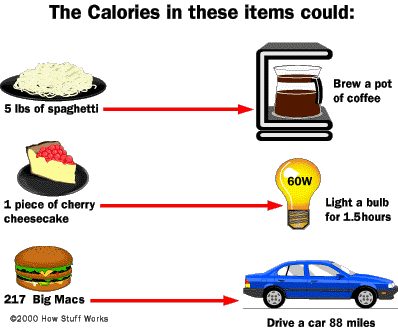
You might picture a gallon of gasoline when you hear “energy.” It holds about 31,000 kilocalories. A can of soda? 200. The word on the label is technically a kilocalorie. One thousand regular calories. We shorten it. We say “calorie.” It’s confusing. It’s also unavoidable if you want to manage your weight.
So let’s clear the fog.
Зміст
What Actually Is a Calorie?
Forget the physics class for a second. A calorie is the heat needed to raise one gram of water by one degree Celsius. Simple.
When you see “200 calories” on a soda can, that’s 200 kilocalories. It’s the energy released if you could magically burn that oatmeal until it turned to ash. The maple-and-brown-sugar packet on your counter? 160 calories. Break it down by ingredients:
- Carbs: 4 calories per gram.
- Protein: 4 calories per gram.
- Fat: 9 calories per gram.
Your body doesn’t just eat the number. It breaks the oatmeal apart. Enzymes turn carbs into glucose. Fats into fatty acids. Proteins into amino acids. These travel through your blood. Your cells grab them. They either use the energy right now or store it for later.
That’s it. No mystery. Just chemistry.
Why Your Body Needs Them (And How to Calculate BMR)
You need energy to stay alive. Not just to run a marathon. To breathe. To pump blood. To keep your heart beating while you sleep.
Most labels use 2,000 calories as the baseline. That’s an average. It’s a rough guess. Your body likely needs more or less. Height. Weight. Gender. Age. Activity level. All of these shift the number.
If you want to know your daily calorie needs for weight maintenance, you look at three things:
- Basal Metabolic Rate (BMR)
- Physical Activity
- Thermic Effect of Food
BMR is the big one. It’s the energy your body burns at rest. It accounts for 60 to 70 percent of your daily burn. It keeps your kidneys working. It stabilizes your temperature. Men usually have a higher BMR than women.
How do you find your number? Use the Harris-Benedict formula. It’s one of the most accurate ways to estimate your baseline.
For an adult male:
66 + (6.3 x weight in lbs) + (12.9 x height in inches) – (6.8 x age)
For an adult female:
655 + (4.3 x weight in lbs) + (4.7 x height in inches) – (4.7 x age)
Check the math. The starting number for women is 655. Not 66. It’s a common typo in old textbooks. But it’s correct here.
This number is just the start. It’s what you burn if you lie in bed all day. You haven’t added movement yet. You haven’t added the energy cost of digesting that oatmeal. But it’s the foundation.
Most women underestimate how much energy their bodies demand just to exist. If you’re trying to lose weight, this number is your anchor. If you’re trying to gain muscle, it’s your floor.
Ignore the 2,000-label average if it doesn’t fit your frame. Your body isn’t a generic template. It’s a specific machine. Calculate its needs. Then feed it accordingly.
Where does movement fit in? That’s the next layer.
Breaking Down Your Daily Caloric Equation
You already know the formula. It’s not magic. It’s math.
Your daily burn is a sum of three distinct parts. First, your Basal Metabolic Rate (BMR). That’s the energy your body uses just to keep your heart beating and lungs breathing while you’re doing absolutely nothing. It’s the biggest chunk of your daily expenditure.
Then comes physical activity. This is the variable. This includes everything from jogging to making your bed. Walking. Lifting groceries. Bending down to tie a shoe. The more you move, the more you burn. But here’s the catch: it depends on your weight. A heavier person burns more calories moving the same distance than a lighter person does. Don’t guess. Check a table. There are plenty of them online. They list specific caloric costs for various activities based on weight.
Finally, the thermic effect of food. This is the energy cost of digestion. Your body has to break food down. It takes work. It takes energy. To calculate this, take your total daily intake and multiply it by 0.10. Ten percent. Simple.
If you want to track how much you eat, use resources like the USDA National Nutrient Database or FoodData Central. Or try Mike’s Calorie And Fat Gram Chart. Add the BMR, the activity burn, and the 10% digestion tax. That’s your number. Or just use a quick calculator if you don’t want to do the math.
The 3,500-Calorie Rule
So, what happens when the input doesn’t match the output?
You either gain or lose fat. It’s that binary.
An accumulation of 3,500 extra calories equals roughly one pound of stored fat. Your body is just saving energy for a rainy day. It’s efficient. Cruel, but efficient.
Conversely, if you burn 3,500 more calories than you eat, your body pulls from its reserves. It converts that stored fat into energy to cover the deficit. One pound gone.
Exercise does more than just burn calories while you’re sweating. It raises your metabolic rate for hours after you stop. This is often called EPOC (Excess Post-exercise Oxygen Consumption). Your body stays in a higher burn state for about two hours post-workout. You’re still torching calories while you’re watching TV.
A Calorie Is a Calorie (But Not Really)
Here’s the controversial part. If you’re only looking at the scale, it doesn’t matter where the calories come from. A calorie from protein is the same unit of energy as a calorie from fat. If you eat exactly what you burn, you maintain. If you eat less, you lose.
But if you care about health, nutrition, and how you feel? It matters immensely.
Where those calories originate dictates your well-being. Carbohydrates and proteins are generally healthier sources than fats. Yes, your body needs fat. It needs it to absorb vitamins. It needs it to function. But an excess of fat can lead to serious health consequences.
The U.S. Food and Drug Administration (FDA) used to recommend a maximum of 30% of daily calories from fat. That’s 600 calories, or 67 grams, in a 2,000-calorie diet.
Many doctors and nutritionists have tightened that guideline. They now suggest a maximum of 25%. That’s 500 calories. Or 56 grams of fat per day.
It’s a shift. A tightening.
The Calorie Density Trap
Look at these numbers. They might surprise you.
| Food | Serving Size | Calories | Fat Grams |
|---|---|---|---|
| Canola Oil | 1 cup | 1,674 | 218 |
| Peanut Butter | 1 cup | 1,520 | 129 |
| Cheddar Cheese | 1 cup | 531 | 44 |
| Granola | 1 cup | 270 | 8 |
| Chocolate Syrup | 1 cup | 837 | 3 |
| Sugar | 1 cup | 774 | 0 |
| Coca-Cola | 1 can | 140 | 0 |
Canola oil is a liquid goldmine of fat. One cup? Nearly 1,700 calories. And all of it is fat.
Peanut butter is dense. 1,520 calories in a cup.
Chocolate syrup? High calories, low fat. Sugar is pure empty calories. Zero fat.
This isn’t about fear. It’s about awareness. You can drink 140 calories of Coke and have zero fat. You can eat a cup of oil and have 218 grams of fat. The impact on your body is different.
Want to dig deeper? Check out articles on How Food Works, How Fats Work, and How Dieting Works. There are links to Nutrition Calculators and resources like CaloriesPerHour.com. You can read about drinking ice water to see if it really burns calories. Or look into fat taxes. The data is there. Use it.