






Most of us pick up these habits before we know better. Maybe it was a bored moment in third grade. Or stress during finals. By the time we hit adolescence, about half of us are chewing on our cuticles. The good news? More than three-fourths of those kids grow out of it by age 35.
It starts as unconscious noise. Anxiety. Boredom. Stress. Doctors call it onychophagia. It’s not a character flaw. It’s a nervous system glitch. You just repeat the motion to self-soothe.
Зміст
The social and health cost
Here’s the hard part. We don’t do it for fun. We do it because it feels like the only way to calm down. But society sees it differently.
Ragged nails look unkempt. Bit fingers look painful. If you bite hard enough, you’ll bleed. You’ll leave the nail bed exposed. It’s not just vanity. It’s health.
Your mouth is full of bacteria. Your fingers are covered in it too. When you bite, you’re trading germs. You’re pushing them deep into the skin. Infections can take root under the nail. Permanent damage to gums and teeth is possible. You’re essentially creating a petri dish between your fingers and your mouth.
The acrylic barrier
So you’re staring at your own jagged edges. You want to stop. You’ve tried bitter nail polish. You’ve tried keeping your hands busy. Nothing stuck.
Try fake nails.
It sounds counterintuitive. Putting something on your nails to stop biting? Yes. The logic is simple. Texture.
When you bite real nails, there’s a satisfying crunch. A soft give. Fake acrylics? They’re hard. They don’t bite. They don’t crumble. They feel wrong in your mouth. It breaks the sensory loop.
The physical barrier makes the habit physically difficult to perform.
It’s not magic. It’s friction. You can’t bite what isn’t there. You can’t tear what is bonded to your natural nail plate. It buys you time. Time to notice you’re doing it. Time to catch the urge before it turns into action.
It’s not a cure. But it’s a pause button. A hard, shiny pause button.
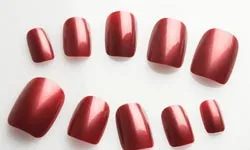

Stop pretending your natural nails are pristine when they’re clearly under attack. If you’ve tried willpower and failed, consider the visual shield of artificial enhancements. Acrylics, gel overlays, wraps, and press-on nails aren’t just for Instagram models anymore. The stigma is gone. They are stylish. They are practical.
The logic is simple. You cannot bite what isn’t there. Or rather, you cannot bite the actual nail plate if it is buried under layers of hard resin or plastic. It changes the texture. It changes the taste. It breaks the sensory loop that triggers the compulsion.
9: Adopt a New Habit
Breaking a habit like nail biting is psychologically difficult. It is often a subconscious response to stress or boredom. Smoking cessation experts know this well. You replace the oral fixation. You do not replace it with something dangerous. You replace it with something manageable.
Try finger tapping. Hum a tune. Chew gum. Eat hard candy. These actions keep your hands busy and your mouth occupied. They provide a sensory outlet for the same energy that drives you to your cuticles.
There is a risk. You might trade one bad habit for another. If you switch from biting to chewing on expensive jewelry or eating excessive sugar, you have not solved the problem. You have just shifted the damage. Weight gain and dental issues are not the price for clean nails.
If distractions fail, the problem may be deeper. Nail biting is rarely classified as a standalone disorder. Most advice is DIY. However, online support groups exist. Finding a “quit buddy” can provide the accountability needed to stay consistent.
8: The Buddy System
Willpower is a finite resource. It drains throughout the day. By the time you are sitting in a meeting or watching a movie, your defenses are low. That is when the hands go to the mouth.
A buddy system works because it introduces social pressure. You are less likely to engage in a shameful behavior when someone you trust is watching. It creates a shared goal. You check in with each other. You celebrate small wins. You call out slip-ups without judgment.
This isn’t about shame. It is about support. When you know someone is waiting for your update, you hesitate. You think before you bite. That split-second pause is enough to rewire the neural pathway over time.
Physical Barriers and Professional Care
If artificial nails feel too permanent or expensive, try physical barriers. Bandages on fingertips. Gloves on hands. They are awkward. They are conspicuous. They work.
The inconvenience is the point. You will not bite through a bandage easily. It feels wrong. It signals to your brain that this is not the time for nibbling.
Safety matters here. If you choose gel or acrylics, go to a licensed professional. Hygiene standards prevent infection. Poorly applied products can lift and trap bacteria. A reputable salon adheres to these protocols. Do not risk a fungal infection for the sake of a manicure.
Addressing the Root Cause
Distractions mask the urge. Barriers block the action. But why are you biting in the first place?
Stress is a common culprit. Anxiety can manifest in physical tics. Boredom can trigger fidgeting. Some people bite when they are thinking deeply. The act provides a grounding sensation.
Identifying the trigger helps. If you bite when stressed, try breathing exercises instead. If you bite when bored, try a fidget toy. Redirect the energy. The nail biting is often a symptom, not the disease.
When to Seek Help
Most people can manage this on their own. But if the biting causes significant damage—bleeding, infection, permanent nail deformation—it may be time to see a therapist.
Cognitive Behavioral Therapy (CBT) can help. It identifies the thought patterns that lead to the action. It teaches coping mechanisms. It is not a quick fix. It is a process.
For most, though, the solution is simpler. Keep your hands busy. Keep your nails protected. Find a friend who will hold you accountable. The road to bite-free nails is paved with small, consistent choices.
You do not need a beehive hairdo to have great nails

Doing it alone is hard. Most people find that having a buddy makes the goal of quitting nail biting significantly easier. It’s not just about willpower. It’s about accountability.
When you have someone else watching your progress, the stakes feel higher. You’re less likely to slip up if you know a friend is expecting you to hold it together. But the benefits go deeper than simple oversight.
Sharing strategies with others who get it is huge. What works for one person might not work for another. But swapping tips gives you a toolkit you wouldn’t have found on your own.
Finding Your Tribe
There’s a psychological reason why group support works. People with the same habits often share similar underlying causes. Maybe it’s stress. Maybe it’s a specific trauma or anxiety profile.
Meeting with others who have that same “meeting of the minds” can be revealing. You start to see your own triggers more clearly when you hear them in someone else’s story.
Web-based groups are an easy entry point. Sites like DailyStrength and MDJunction connect people with specific afflictions. You can jump in, stay anonymous if you want, and learn how others cope.
But let’s be honest. Not everyone wants a public forum for their bad habit.
If you’re private by nature, a group might feel like too much. For guarded individuals, therapy is often more effective when it’s one-on-one. Personalized stress-relief techniques work better than generic group advice in those cases.
Relaxation as a Cure
Some people bite their nails because it soothes them. It’s a self-soothing mechanism in the face of stress or worry. If that’s you, you need to replace that soothing action with something else.
Relaxation techniques can reduce the anxiety that drives the biting. This isn’t about calming down in general. It’s about interrupting the specific urge to chew.
Creating a soothing environment helps. Drink herbal tea. Use lotions with calming scents. Make your hands feel good so you don’t want to mutilate them.
Tanya Clausen, a clinical social worker in Washington, D.C., points out that breathing techniques are key. Deep breathing or even quick, sharp breaths can lower the stress levels that trigger the behavior.
Nail biting is often a symptom of deeper anxiety, not just a bad habit.
This behavior often comes with other body-oriented obsessions. Hair twirling. Skin picking. These all affect your appearance, which is usually the main reason you want to stop in the first place.
Visualize Success
The most effective method isn’t always the most obvious one. Sometimes it’s mental.
Envisioning victory over the problem changes how you see your hands. It shifts the focus from the damage to the potential for health.
Picture your nails growing out. Smooth. Strong. Unchewed.
Does that image feel real to you? Can you see yourself reaching for a stress ball instead of your finger?
If you can see the win, you’re more likely to fight for it.

Most of us spend a lot of effort trying to look our best. It’s hard to maintain that polish when you’re constantly chewing on your fingertips. Nail biting leaves your cuticles ragged and your nails uneven. This is why so many biters keep their hands tucked away, hidden in pockets or folded in their laps. It’s a shame. You deserve to show off your hands.
If the look of your nibbled nails causes anxiety, you need a new strategy. Positive visual imagery can be a powerful motivator. It’s not about delusion. It’s about environment. Post pictures of healthy, beautiful hands around your space. Use them as reminders. Let them be the incentive you need to stop the habit.
The Psychology of Visualization
Visualizing success doesn’t always mean looking at photos. You can also close your eyes and imagine yourself resisting the urge. The goal is simple. You want your brain to “know” what it feels like to break the habit.
According to therapist Clausen, this is a specific form of exposure therapy. “The idea is that you desensitize your brain to the urge to bite by creating a controlled environment,” she says. You boost your ability to overcome the trigger in real life by practicing in your mind first. It’s a mental rehearsal for willpower.
The Power of Your Own Manicure
While generic images of perfect hands help, there is a stronger deterrent. Post pictures of your own hands fresh from a salon. Nothing screams “success” quite like an image of your own dazzling digits. It’s personal. It’s tangible. You’ve already paid for the perfection. You’ve already achieved the look.
When you see that glossy finish, do you really want to ruin it? Probably not. The visual reminder works because it represents a tangible investment in your self-care. It’s a concrete reason to keep those fingers away from your mouth.
5: Keep Your Nails Groomed
It isn’t always about anxiety. For some, it’s about perfection. You see a rough edge and you have to smooth it out. The result? A ragged cuticle and a finger that looks like it lost a fight with a cheese grater.
The fix is simple, but requires discipline. Keep your nails groomed.
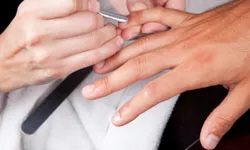
Carry a kit. Small clippers. A fine file. A cuticle pusher. If you have the tools, you don’t need your teeth. When a hangnail flares up, you clip it. You file it. You don’t bite it off.
Try a weekly home manicure. It takes twenty minutes. It breaks the cycle.
Start by clipping nails to a uniform length. File in one direction only. Back and forth splinters the keratin. Soak fingers in warm water with a drop of olive oil or lotion. This softens the cuticle. Gently push it back with a cotton-wrapped stick. Dry off. Moisturize heavily. Use a buffer for shine if you want that glass-like finish.
If you have the budget, professional manicures act as a powerful deterrent. They work for everyone. Men and women alike. The cost creates a psychological barrier. You paid for this. You won’t ruin it in five seconds. Add gel polish. Add gems. Add texture. The more effort you put in, the harder it is to destroy.
What if this doesn’t work? What if the urge is too strong?
4: Apply a Deterrent
Walk down any drugstore aisle. You’ll see them. Bitter nail polishes. Creams. Oils.
The premise is basic behavior modification. Nail biting is often unconscious. You put your fingers in your mouth before you even think about it. These products change that.
They taste terrible.
The shock of the flavor breaks the trance. You pull away. You become aware. You stop.
Most products use denatonium saccharide. It is the bitterest compound known to science. It is non-toxic. It is also used in antifreeze and household cleaners to keep kids and pets from drinking them. Some brands add cayenne pepper extract for an extra burn.
You can try home remedies. Black pepper. Bitters. But these wash off in the shower. Commercial deterrents are formulated to stick. They are designed to last.
It’s not a magic cure. Some people get used to the taste. Others find it so disgusting they can’t keep the product on their fingers. Some wear bracelets as tactile reminders. If the biting is destroying your teeth, see a dentist. A mouth guard might be the only thing that stops the structural damage.
But what if the taste doesn’t register? What if you’re too distracted?
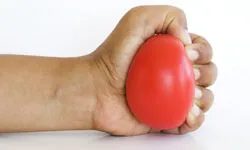
Redirect that nervous energy. When you finally notice your teeth grazing your cuticles, shift the focus. For many, keeping hands occupied is the only way to break the unconscious loop. A stress ball fits perfectly in the palm of the hand. Squeeze it. Replace the nibble. It isn’t exactly the same sensation, but consistency matters. If you stick with the substitution, the urge often fades. Silly Putty works too. Knead it. Stretch it. Give your fingers something to do that doesn’t involve skin.
Shift the Focus to Productive Hobbies
If passive squeezing feels like too little effort, try a craft that demands constant attention. Drawing. Painting. Sewing. Knitting. Crocheting.
These activities lock your hands into a rhythm. Once you’re comfortable, you can practice them anywhere. Watch TV. Wait in line. Ride the bus. You won’t have the mental space to zone out and bite your nails if your fingers are busy threading yarn or holding a crochet hook. The physical act of creating something occupies the same neural pathways that trigger self-soothing habits.
Why You Bite: The Root Cause
Stop looking at your fingers for a minute. Look at your brain. The “why” behind the habit is often more important than the act itself.
At first glance, it seems random. You just started one day and never stopped. For some, that’s true. It’s pure habit. But for most, there’s a specific trigger. Boredom. Stress. Fear. Anxiety.
Think back. Was your first bite on the first day of school? That sleepover? The first time you were away from home? You were likely overwhelmed. Biting nails gave you something physical to control when you felt powerless. It was a coping mechanism. A way to discharge nervous energy.
Identifying that motivation is key. Once you know what’s driving the behavior, you can find a healthier outlet. Consider keeping a simple journal. You don’t need to write essays. Just answer three questions when you catch yourself:
- Where are you?
- What are you doing?
- How do you feel? Physically? Mentally?
Patterns will emerge. Maybe it’s always Tuesday afternoons. Maybe it’s only when you’re waiting for a client call. Seeing the pattern makes it easier to disrupt.
Handling the Triggers
You can’t always remove the source of stress. Deadlines exist. Anxiety doesn’t always pack its bags and leave just because you want it to. So, manage the feeling differently.
If boredom strikes at work, stand up. Walk to the water cooler. Get a glass of water. Change your physical state.
If flying triggers panic, arm yourself. Bring a stack of books. Load your laptop with movies. Keep your mind engaged. Distraction works.
Talking helps too. Share your feelings with a friend. A therapist. Someone who listens. Sometimes the pressure valve needs to release verbally, not physically.
When to Seek Professional Treatment
You’ve tried the balls. The crafts. The journaling. The walking. Nothing seems to stick.
It might be time to bring in a pro.
1: Seek Treatment
This isn’t a failure. It’s a strategy. Some habits run too deep for self-help hacks alone. A therapist can help you dig into the underlying anxiety or OCD tendencies that fuel the biting. Cognitive behavioral therapy, for instance, is highly effective for body-focused repetitive behaviors. It’s not just about stopping the bite. It’s about understanding the impulse and building new, sustainable responses.
If you’ve hit a wall, don’t push harder. Push smarter. Professional guidance offers tools tailored to your specific triggers. It’s practical. It’s direct. And sometimes, it’s the only thing that breaks the cycle.

When Nail Biting Becomes a Medical Concern
If you are routinely tearing into your cuticles to the point of bleeding, losing actual nail plates, or causing permanent tissue damage, the habit has moved beyond mere nervousness. It has become a physical injury.
This is onychophagia.
Clinically, this falls under obsessive-compulsive disorders. The distinction matters. It isn’t just a bad habit; it’s a clinical behavior pattern. If you suspect you are dealing with more than just stress, a psychiatrist can offer a roadmap. They don’t just nod and hope for the best. They may prescribe medication, therapy, or both.
Breaking the Cycle
You do not need an OCD diagnosis to stop the biting. Behavioral treatments work for a wide spectrum of users.
Cognitive behavioral therapy is the gold standard here. You explore the trigger. You find the feeling. You replace the action with something new. It is deliberate. It is work.
Distraction is equally valid. Meditation. Yoga. High-intensity exercise. Anything that keeps your hands busy and your mind occupied can interrupt the urge. What works for one person fails for another. Try a combination. Stack strategies. See what sticks.
Some people find relief through hypnosis. The goal is to teach your subconscious cues. You become aware of the habit in real-time. You learn to relax the compulsion itself. It is about lowering the baseline anxiety that drives the behavior.
There is no shame in the process. There is only the outcome. Eventually, you will look down and realize the biting has stopped. The nails grow back. The confidence returns.
For more on beauty and hygiene, check out the links on the next page.