





Spring is here. You want a change. Maybe new earrings. Maybe a cartilage piercing to finally wear those hoops you’ve been eyeing. It seems simple enough. Walk into a mall kiosk. Point. Click. Done.
Except it isn’t done. It’s ruined.
That sharp snap of the gun echoes in your head months later. Your ear is bright red. It burns. It throbs. You thought you were being practical—fast, cheap, low-intimidation. You were wrong.
Once you step into a professional studio, you realize something shocking: we have been traumatizing our bodies for years. It’s time to stop.
Зміст
The truth about piercing guns
Let’s be clear. A piercing gun does not pierce your skin. It tears it.
The mechanism is brutal. It relies on force. A blunt stud is shot through your lobe at high speed. It doesn’t cut. It crushes and separates tissue by pressure. Think of it this way: using scissors to cut paper is precise. Shoving a ballpoint pen through paper is destructive. The pen leaves ragged edges. It damages the fibers.
Your earlobe takes the damage. But the cartilage? That’s where it gets dangerous. Cartilage has poor blood supply. When a gun impacts it, it can cause micro-fractures. These aren’t always visible immediately. They lead to deformities. Chronic pain. Swelling that never quite goes away.
Many people blame poor aftercare for these issues. They scrub too hard. They touch it with dirty hands. But often, the problem started with the tool. The gun itself is the aggressor.
Why needles are safer and less painful
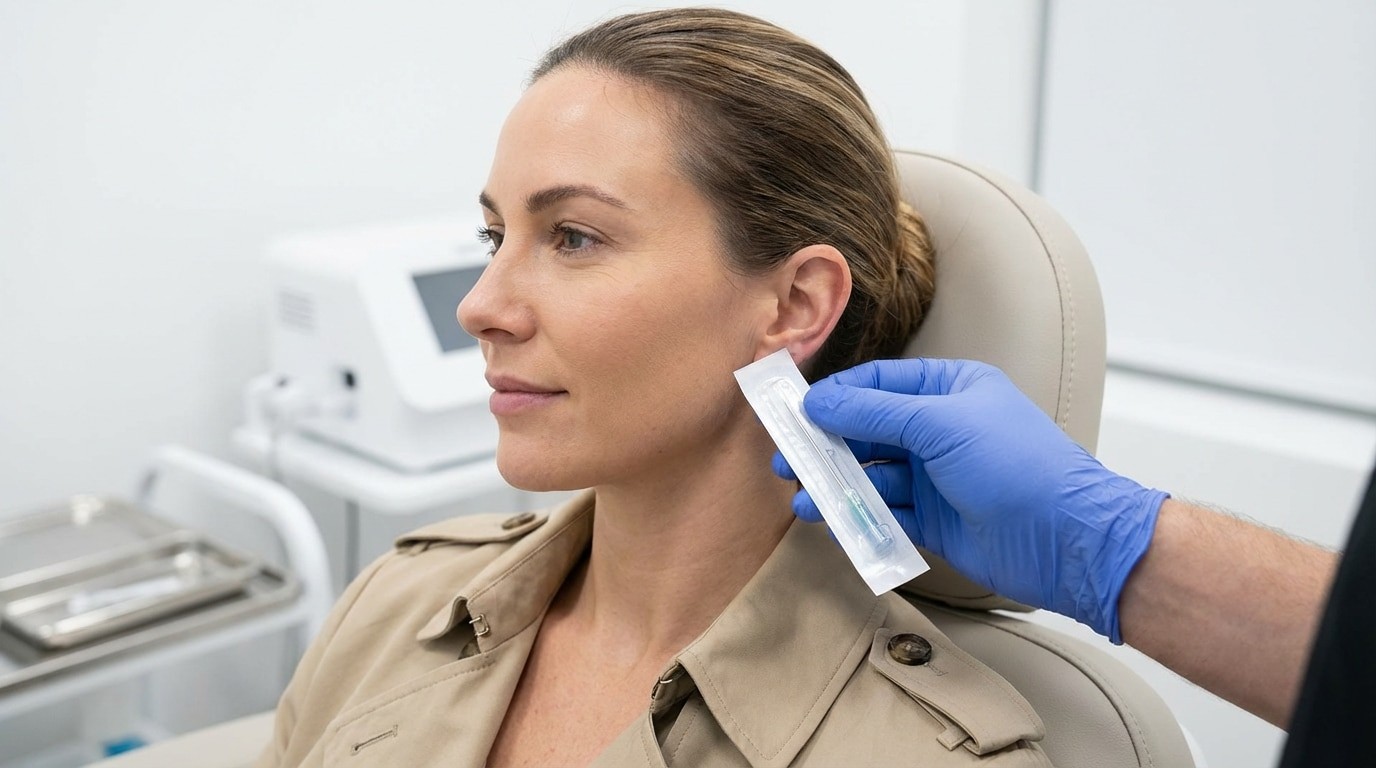
A professional piercer uses a hollow, sterilized needle. It looks intimidating. It feels like an exaggeration. But it works differently.
The needle is sharp. It cuts. It creates a clean incision. There is no crushing. No tearing. Just a clean path.
Paradoxically, this causes less pain than a gun. The needle glides through tissue with zero resistance. The sensation is a quick, sharp pressure. Then, it’s over. The gun feels like a punch. The needle feels like a pinch.
This precision respects the integrity of your skin. Healing begins faster. The trauma to the cells is minimal. Your imagination usually makes the needle sound worse than it is. The reality is far gentler.
The hygiene gap you can’t ignore
Here is the deal-breaker for many. Hygiene.
Piercing guns are usually made of plastic. Plastic cannot withstand the high heat of an autoclave. An autoclave is the only way to truly sterilize equipment—killing viruses and bacteria at the source.
So, what do mall kiosks do? They wipe them down. With an alcohol wipe. Between clients.
This is not enough. Blood and lymph can get trapped inside the gun’s mechanism. You never see it. You never know who used it before you. You are trusting a stranger’s cleanup method with your open wound.
In a studio, everything is different. Every item that touches your skin is either single-use or sterilized in sealed packaging. The environment is clinical. Aseptic. The piercer puts on sterile gloves. They open the needle in front of you. It looks strict. It feels safe. It protects you from minor infections and serious cross-contamination risks.
Expertise matters more than sales skills
Piercing is anatomy. It is science.
A professional piercer studies your ear shape. They look at your lobe thickness. They assess your cartilage structure. Every ear is unique. The angle of the entry matters. If the angle is off, the earring will sit poorly. It will pull. It will irritate. It might even cause a migration or rejection over time.
A jeweler is well-meaning. But they are a seller. Their training lasts hours. It covers how to use the machine. Not how human tissue heals. Not the nuances of vascularization. Not the location of nerves.
A piercer has years of apprenticeship. They know if your anatomy supports a specific piercing. They know when to say no. They will suggest an alternative that looks better and heals easier. They are not trying to clear inventory. They are trying to ensure you leave happy and healed.
The jewelry you wear matters
Let’s talk about the earring itself. The one that comes with the gun.
It usually uses a butterfly back. This clasp sits flush against your ear. It compresses the tissue. Your ear swells after a piercing. The butterfly back doesn’t allow for that swelling. It cuts off circulation. It traps moisture. It is a breeding ground for bacteria. Hard to clean under the showerhead. Hard to keep sanitary.
Then there is the material. Mall jewelry often contains nickel. Nickel is a potent allergen. Even if you aren’t severely allergic, constant low-level exposure can cause irritation.
Professional studios use implant-grade titanium. ASTM F-136 standard. This is the same material used in surgical implants. It is biocompatible. Your body accepts it. It rarely triggers reactions.
The initial jewelry is typically a flat-back labret. No protruding backs to catch on hair or clothes. No pressure points. Just smooth, safe healing.
You deserve an experience that doesn’t end in scar tissue. You deserve an ear that looks good and feels good. Stop letting convenience dictate your body’s safety.
La différence ne se joue pas seulement pendant la séance. Elle se mesure dans les semaines qui suivent. Avec une aiguille, le traumatisme initial est minime. L’incision est propre. Pas de déchirure. Juste un passage précis.
Le corps ne lutte pas. Il n’y a pas de corps étranger agressif à rejeter. Le matériau est biocompatible. Résultat ? Moins de gonflements. Moins de sécrétions. Les croûtes, ces ennemies de la guérison, sont beaucoup plus rares.
Le suivi après le piercing compte autant que la technique
Un bon pierceur ne vous laisse pas tomber après la séance. C’est crucial. Il assure un suivi de cicatrisation. Disponible pour vos inquiétudes. Capable d’ajuster la taille de la barre une fois le gonflement retombé. Il vérifie que tout évolue sainement.
C’est une tranquillité d’esprit inestimable. Comparez cela à l’isolement face à une oreille qui chauffe un samedi soir. Vous ne savez pas quoi faire. Vous paniquez. Avec un professionnel, vous avez une réponse. Immédiate.
La santé de vos oreilles comme priorité
L’équation est simple si on regarde les faits.
D’un côté, une méthode brutale. Une hygiène approximative. Des bijoux de qualité standard, souvent en alliage nickelé qui irrite la peau. De l’autre, une technique douce. Stérile. Personnalisée. Des matériaux haut de gamme.
Certes, le tarif en salon est souvent légèrement plus élevé qu’en bijouterie. Mais ce prix couvre la sécurité. L’expertise. La garantie d’un bijou que vous garderez des années sans qu’il ne s’oxyde. Sans vous rendre malade.
Pourquoi choisir l’aiguille pour vos lobes
Franchir le pas du salon peut sembler impressionnant la première fois. Surtout si l’on n’est pas familier de cet univers. Mais l’accueil y est généralement chaleureux. Très professionnel. On ne vous juge pas. On vous accueille.
En ce début de printemps, il est temps de prioriser notre bien-être autant que notre style. Vos oreilles, libérées des infections à répétition et des douleurs inutiles, vous remercieront.
Opter pour l’aiguille plutôt que le pistolet, c’est faire le choix de la qualité. De l’humanité. De la durabilité. Alors, prête à confier vos lobes à des mains expertes pour briller sans souffrir ? Peut-être pas tout de suite. Mais dès que vous sentez que vos oreilles en ont assez de la douleur inutile.