


Hands off the beef. 🍔
Remember asking Dad if you could flip patties on the back porch? You loved the smell more than the meat, which is fair. Dad focused on grill time, not shaping. He missed the point. Shaping dictates juice. Texture. Life or death for a bun-dweller.
So I tested seven methods. Seven ways to squash meat into submission. Charcoal grill. Medium heat. 400 to 425 degrees. One afternoon. One winner. It wasn’t a $50 gadget. It was a thing sitting in your junk drawer.
Зміст
The Rules
Here’s how we played.
* Meat: 80/20 beef. Freshly ground. 1/4 lb balls. Cold until use.
* Seasoning: Salt and pepper. Just those. Nothing fancy.
* Heat: Direct charcoal. Grates oiled. Preheated.
* Cook: Medium doneness. Flip once. Two to three minutes per side.
* Rest: Five minutes. Then eat. Edges and center both tasted.
* Scoring: 1 to 10. Ten means juicy, sturdy, and evenly cooked. If I need to buy a plastic widget I’ll never use, that hurts the score.
Why trust this take? I went to culinary school. I was a line cook. I’ve smashed, stacked, and chewed burgers for fifteen years. I know a hockey puck when I bite into one.
The Failures
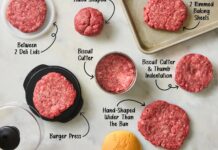
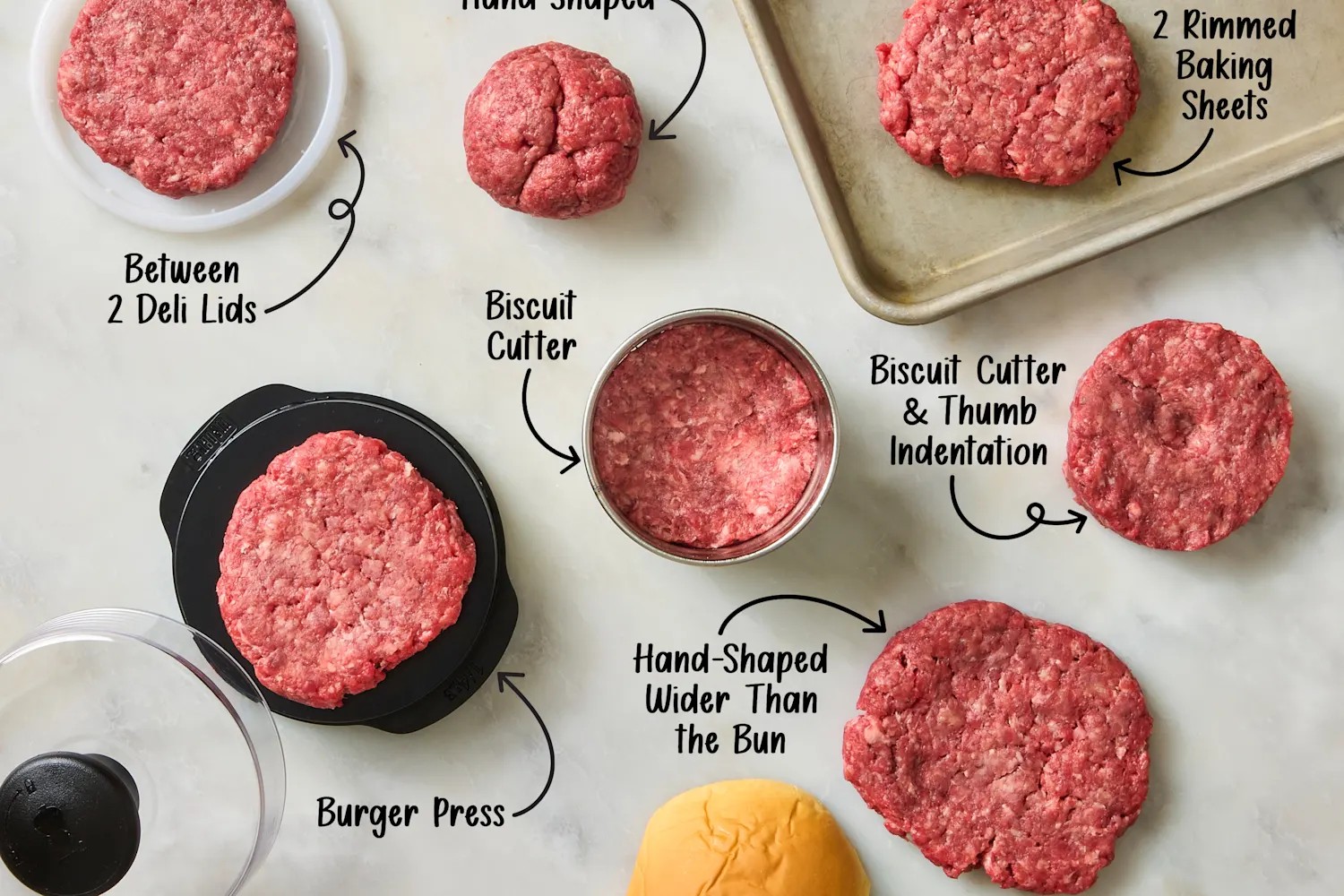
Between Baking Sheets. Rating: 3/10.
Seen that video? Wet sheets. Meat sandwich. Press down.
Disappointing. Blind guessing. You can’t see the patty form. My result looked like a ragged smash burger attempt gone wrong. It fell apart mid-flip. One chunk almost disappeared into the grill abyss. The flavor? Fine. More surface area, more char. But structurally? A disaster. Not worth the scrubbing.
The Burger Press. Rating: 4/10.
Weber brand. Metal. Looks industrial.
The instructions? A YouTube video. Reviews warned of sticking. They were right.
I pressed the meat. Lifted the lid. Nothing came off. I had to swing it like a hammer. Crack. The patty split. I patched it up like a surgeon on a budget. It cooked into an oval mess. Tasted normal. Looked sad.
Who buys this? It’s too tall for drawers. Line it with parchment, maybe? Still a bad deal.
The Middle Pack
Biscuit Cutter + Thumb Dip. Rating: 5/10.
Cutter for roundness. Thumb for a center divot. Theory says burgers puff, so a divot keeps them flat.
The meat didn’t puff enough. Center was well-done. Edges were medium. Uneven cook. It didn’t ruin the taste—the meat was tender—but the divot was unnecessary extra work.
Deli Lids. Rating: 6/10.
Two plastic containers from your last tuna order. Sandwich meat between. Press.
Clean edges. Perfect circle. Beautiful, almost.
But it required wrestling. I patted the meat around the lids to make it fit. Too much pressure. The resulting burger was dense. Tough. Like eating a steak that lost a fight. Good if you hate touching raw meat, or if you live in a plastic apocalypse.
The Hand Method
Basic Hand Shaping. Rating: 7/10.
Roll ball. Flatten. Pinch edges. Classic.
This puffed in the center. Cut into it? An air pocket. Why? Because I didn’t pack it tight. It stayed light and juicy. Tasted like a real burger.
But consistency? That depends on you. A novice will make ovals. Cracks. Inconsistent thickness.
Wider-Than-Bun Hand Shape. Rating: 8/10.
Same hands. Just make it wider. Half-inch past the bun’s edge.
Shrinking works here. The thinner profile meant less puffing. Faster cooking. More crust. More joy. The ratio of browned edge to pink interior is chef’s kiss. If you love the crunch of a smash burger but want some substance, do this.
The Winner
The Biscuit Cutter. Rating: 10/10.
Simple. Almost stupidly simple.
- Place beef inside a round cutter. Match bun diameter.
- Press until flat.
- Lift. Grill.
No oil needed. No sticking. The metal rim defines the shape. The meat releases cleanly.
It looked perfect on the grate. No cracks during the flip. No drama.
The texture was lighter than the others. Looser. Airier. Did you know how tight you usually pack a patty? It compresses the beef, makes it dense, kills the juice. This tool prevents overworking. It keeps the meat fluffy.
The taste? Unbelievable. Same beef. Same salt. Just more beef flavor. Why? Less compression means better structure. Better structure holds juice.
The key isn’t pressure. It’s restraint.
The cutter washes easily. Tucks in a drawer. Costs five dollars at most. Is it a specialty tool? Or is it essential equipment?
We treat kitchen tools like luxury items. We buy presses that don’t work. We avoid hands because they’re messy. We forget that simplicity often wins.
Keep a cutter handy. Ditch the gadget. Press lightly. Let the heat do the work.
What happens if you overwork the meat again? Just check the grill next time. 🥩