




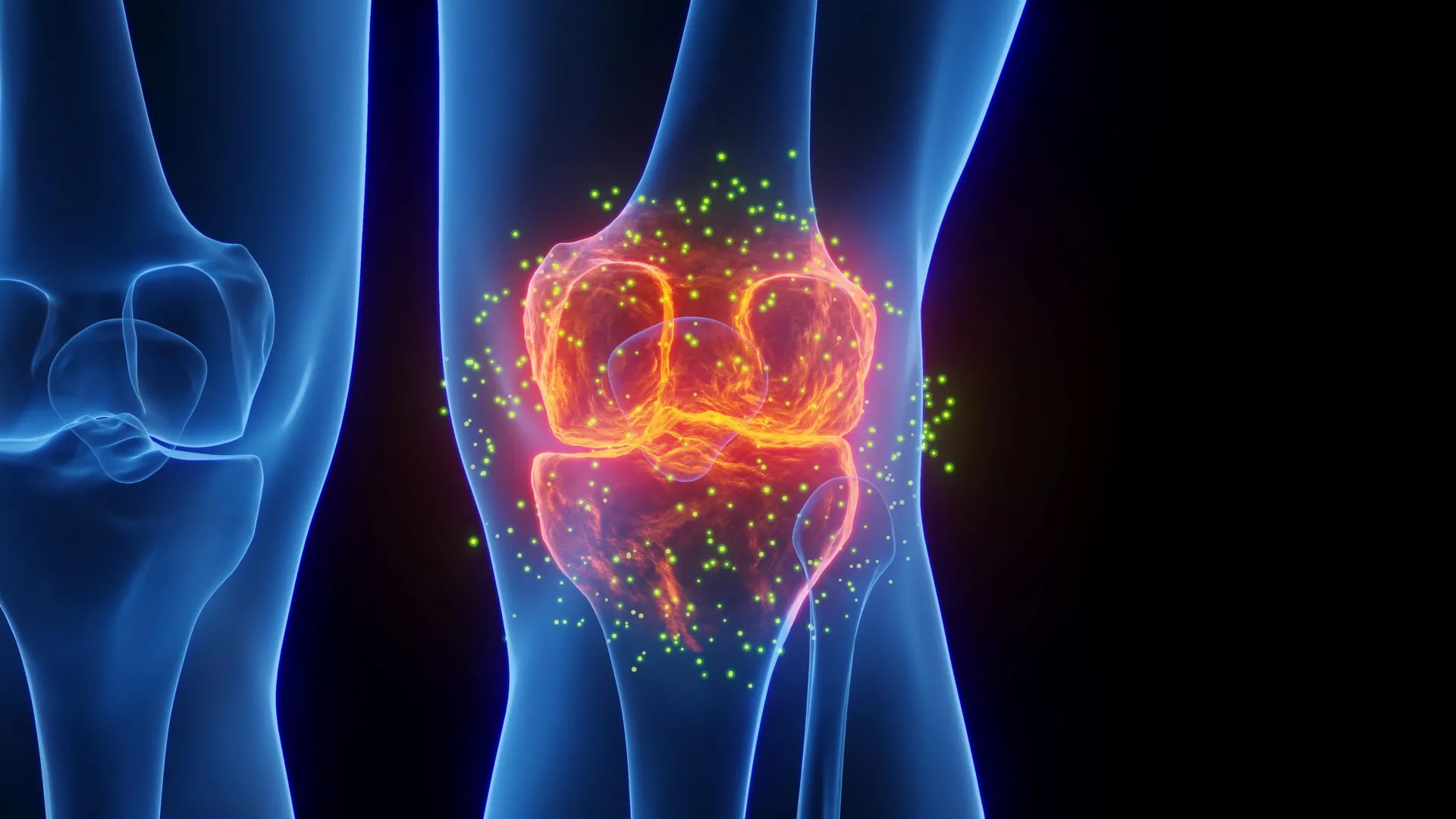
Arthritis might have an off switch. Stanford scientists didn’t just treat symptoms. They regrew lost cartilage. In aged mice, it reversed the damage. The results? Shockingly good. Even human knee samples from surgeries started building new tissue after just a week.
This changes things.
Most people think joint pain is permanent. A slow fade. But blocking one specific protein called 15-PDGH seems to rewind that process. No stem cells needed. Just old cells waking up and doing their job again. If this holds up in people, injections or pills could fix worn-out hips and knees. Surgery might become less of a certainty.
Зміст
The Problem with “Normal” Aging
Osteoarthritis affects one in five Americans. It costs billions. Pain. Stiffness. Swelling. Current meds just mask it. Nothing stops the decay.
The issue isn’t just wear and tear. It’s biochemical. A protein known as a “gerozyome” takes over. 15-PGDH gets abundant with age. It chews through helpful compounds like prostaglandin E2, leaving tissues weak and inflamed.
“It contributes to declining tissue function throughout the entire body.”
Blocking this enzyme reverses that trend. Older mice got stronger muscles. Their nerves recovered. Now, their cartilage heals.
Not How It Was Supposed to Work
Here’s the twist. We assumed stem cells drive regeneration. They divide, differentiate, fix things.
Cartilage doesn’t use stem cells here. It uses existing ones.
Chondrocytes—the cells currently running the joint—simply change their minds. They shift their gene expression. They stop being old, inflammatory cells and become young, structural ones again. It is a reprogramming of sorts, happening inside the joint itself.
“This is a new way,” said Helen Blau, a senior author. “We were looking for stem cells. They clearly aren’t involved.”
It is messy biology. Exciting though.
Why 15-PGDH Was the Target
Earlier lab work showed prostaglandin E2 helps muscles heal. 15-PGDH destroys it. Block the destroyer, save the healer.
The team checked old mice vs. young ones. Guess what? 15-PGDH doubles with age. They treated older mice with an inhibitor. Some got belly injections, others knee injections. Both worked.
Thin, frayed cartilage thickened. Not just any cartilage, but hyaline cartilage—the good kind, the slippery kind your knees actually need. Not fibrocartilage, the scar-like tissue that usually forms after injury and performs poorly.
It regenerated the actual functional surface.
Preventing the Domino Effect
What about injuries? Think soccer pivots. Basketball cuts. ACL tears.
Half of people who tear their ACL get osteoarthritis within fifteen years. It’s almost guaranteed.
Mice with simulated ACL tears got the inhibitor twice a week for four weeks. They stayed healthy. Untreated mice spiked 15-PGDH double and developed arthritis in months.
Treated mice walked normally. Put weight on the bad leg. They avoided the secondary collapse of the joint.
Isn’t that ironic? A molecule usually blamed for inflammation helps when you keep its balance right.
The Human Proof
Does this work in people?
Researchers took discarded human cartilage. From patients already getting total knee replacements. Tissue that was doomed.
One week of treatment. The breakdown signals dropped. Cells started building new hyaline cartilage. Existing cells changed their gene patterns to a youthful state. No new cells were recruited. The army was already there; it just forgot how to fight for itself.
“A large pool of existing cells… changing their expression,” noted Nidhi Bhutani. “A bigger overall impact clinically.”
Phase 1 trials for muscle weakness are already done. Safe in healthy humans. A similar trial for cartilage seems likely soon.
The Fine Print
Blau, Bhutani and others have patents on this tech. Licensed to Epirium Bio. Equity involved. Science rarely exists in a vacuum.
Still. Regrowing cartilage by flipping a molecular switch? That is huge. Maybe we don’t need to replace joints after all. Just restart them.
Who knows? The trial begins now.