



Sake is often lumped in with wine. It looks like white wine. It has about 14 to 16 percent alcohol. But calling it wine is wrong. It is a completely different beast.
Sake is light in color. It has no bubbles. The flavor leans sweet. The process to make it is unique. It uses multiple parallel fermentation. This means starch turns to sugar, then sugar turns to alcohol. All at once.
The rice is the key. Not just any rice works. Special strains are milled down. The outer layers are stripped away. The grain shrinks to 50 to 70 percent of its original size. This precision matters.
Зміст
The Brewing Process
Production starts with kome-koji. You take steamed rice and mix it with koji fungus. This fungus is Aspergillus oryzae. It converts the starch into fermentable sugars.
Workers mix the koji with water and fresh steamed rice. Traditionally they do this by hand. They wrap the mixture in a blanket. They incubate it. It becomes a sweet, crumbly dry material.
Then the vat work begins. This mixture goes into a vat with more rice and water. Sake yeast (Saccharomyces cerevisiae ) joins the party. The mix ferments for about four weeks. This creates moto. It reaches about 11 percent alcohol.
More ingredients are added. More koji. More steamed rice. More water. A second fermentation starts. It lasts about seven days.
The grain remains in a single vat throughout this process. This distinguishes sake fermentation from beer or wine.
After resting for another week, the sake is filtered. It is pasteurized. It is bottled. Alcohol may be added to hit the desired strength.
Serving and Storage
In Japan, sake is the national beverage. Serving it is a ceremony. It is not just poured into a random glass.
It is warmed in a small earthenware or porcelain bottle called a tokkuri. You sip it from a small porcelain cup called a sakazuki.
Not all sake is warm. Premium sake has a delicate flavor. It is served cold. Or on ice.
When is sake best? Less than a year after bottling. After that, it fades.
A Brief History
Manufacture began after wet rice cultivation arrived in Japan in the 3rd century BCE. The first written record dates to the 3rd century CE. The first reference to its making comes from the 8th century.
Ancient Japan had strict rules. The imperial court made it. Large temples and shrines made it. Regular people were kept out.
That changed in the early 12th century. The general population began manufacturing sake. By the early 16th century, the modern process was nearly perfected.
World War II changed things again. Rice was scarce. Manufacturers added distilled alcohol to the rice mash. This was not for flavor. It was to increase production. It worked. They could meet the demand. This method became common. Most sake today includes added alcohol.
Sacred Sake
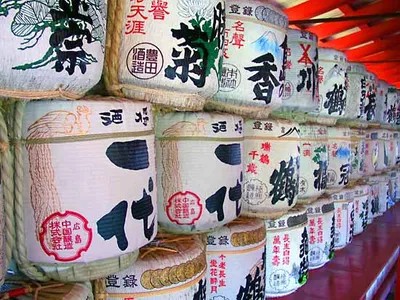
Sake is the drink of the kami. These are the gods of Shintō. It is the indigenous religion of Japan.
It is drunk at festivals. It is included in offerings to the kami.
At a Shintō wedding, the bridal couple performs a ceremony. They drink sake from lacquer cups. It is a ritual. It is a bond.
So next time you see a bottle of sake, remember the rice. Remember the fungus. Remember the centuries of tradition. It is not wine. It is something else entirely.